Modi turns INS Vikrant into stage to whitewash Operation Sindhoor failures
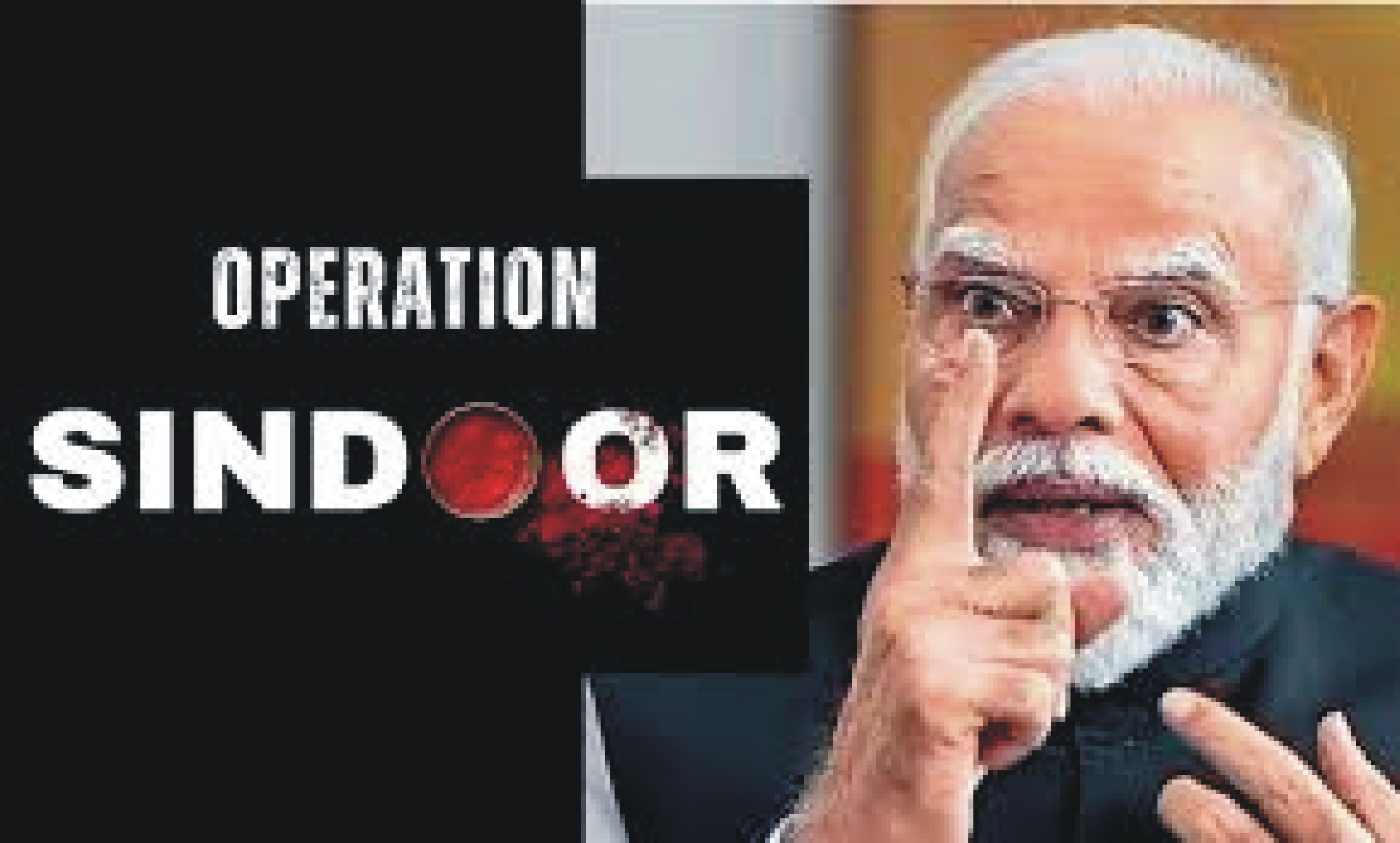
New Delhi: Indian Prime Minister Narendra Modi’s Diwali address aboard the Indian Navy’s aircraft carrier INS Vikrant has been widely criticized as a political spectacle designed to mask India’s deep military, operational, and structural weaknesses.
According to Kashmir Media Service, independent data and defence analyses reveal stark contradictions between Modi’s rhetoric of “maritime strength” and India’s actual defence preparedness, exposing the country’s widening credibility gap before the international community.
India’s defence exports stood at a mere $2.1 billion in 2024–25, compared to $13.5 billion in imports, making a mockery of Modi’s claim that India is on track to become the “world’s largest defence exporter.” Despite massive spending, the Indian Army—responsible for most operational engagements—remains severely under-equipped, with thousands of missing small arms, and shortages of tanks and artillery.

Observers note that Modi’s focus on the INS Vikrant—a INR 23,000 crore project—highlights India’s skewed defence priorities. While the Navy received INR 1.2 trillion in the 2024–25 budget, the Army and Air Force were allocated smaller shares, despite bearing the brunt of India’s border conflicts. Critics have dubbed INS Vikrant a “white elephant”—symbolically grand, but strategically hollow.
Modi’s assertion that Indian forces “shattered the enemy” during Operation Sindhoor has also been debunked. Reports by SIPRI and Jane’s Defence confirmed that India failed to secure any decisive advantage along the Line of Control and Siachen. Neutral observers, including UN and EU analysts, described the outcome as a stalemate, contradicting New Delhi’s triumphalist narrative.
Similarly, Modi’s claim that the Indian Navy “blocked Pakistani ships” has been proven false. Satellite data and international maritime reports show that INS Vikrant made no combat sorties during Operation Sindhoor, and that no Pakistani naval vessel was interdicted.
Experts say Modi’s insistence on using the military for political theater undermines professionalism and injects Hindutva symbolism into the armed forces. His Diwali celebrations aboard Vikrant were seen less as an act of solidarity and more as an extension of BJP’s ideological messaging, turning the forces into instruments of propaganda.
Despite portraying INS Vikrant as a symbol of “Aatmanirbhar Bharat,” defence analysts reveal that over 40% of its components—including propulsion, radar, and avionics—were imported. The ship’s construction suffered eight years of delay and a 50% cost overrun, undermining Modi’s claim of self-reliance.
India’s wider security picture remains grim. Maoist insurgencies recorded over 2,100 incidents in 2024, while freedom movements in IIOJK, Ladakh, and Punjab continue to challenge state control. Instead of addressing these crises, Modi’s speeches attempt to project strength abroad while suppressing dissent at home.
Defence experts warn that India’s militaristic rhetoric and prestige-driven spending risk destabilizing the region, especially as it lags far behind China’s 350-ship navy and advanced maritime capabilities.
Analysts conclude that Modi’s speech aboard INS Vikrant was less a celebration of strength and more a desperate attempt to rewrite the failures of Operation Sindhoor through spectacle and symbolism. Behind the slogans of “self-reliance” and “national pride” lies a fractured reality—of underfunded troops, inflated claims, and a military increasingly subservient to political ideology.