Bihar elections 2025: Political survival, communal polarization and manufactured nationalism
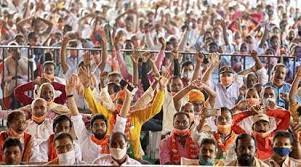
New Delhi: The upcoming Bihar Legislative Assembly elections, scheduled in two phases on November 6 and 11, 2025, have once again exposed how the ruling Bharatiya Janata Party (BJP) and its allies are using communal polarization and manufactured nationalism as tools for political survival amid growing public discontent.
According to Kashmir Media Service, unlike previous elections held in multiple phases, this year’s two-phase polling is being viewed as the Election Commission’s attempt to simplify logistics in an increasingly divided political environment. Bihar Chief Minister Nitish Kumar, heading the Janata Dal (United) under the BJP-led National Democratic Alliance (NDA), has faced mounting dissatisfaction since returning to power in August 2022. Widespread corruption, unemployment and collapsing infrastructure have created deep unrest, particularly among rural and lower-caste communities. The 243-member Assembly, where 122 seats are required for a majority, remains finely balanced. The NDA currently holds 132 seats — including BJP’s 78 and JD(U)’s 45 — while the opposition Mahagathbandhan controls 110, led by the Rashtriya Janata Dal (RJD) and the Congress.
The BJP released its first list of 94 candidates in early October followed by another 12 later in the month, combining old faces with new entrants. Its campaign narrative continues to revolve around “development, nationalism and security,” with heavy reliance on anti-Pakistan rhetoric and the so-called “Operation Sindoor” narrative. Following the Pahalgam attack, Prime Minister Narendra Modi delivered his first anti-Pakistan remarks at a Bihar rally, deliberately linking external aggression to domestic politics in a bid to energize his party’s vote bank.

Analysts say the Modi government’s strategy in Bihar mirrors a familiar national pattern — inflaming communal passions to divert attention from governance failures. The BJP-JD(U) alliance has been under strain due to unfulfilled promises, a faltering economy and mass unemployment. Despite lofty claims of “vikas” (development), Bihar remains one of India’s poorest states. A capital expenditure of ₹42,000 crore — roughly 14 percent of the total budget — has done little to improve infrastructure or job creation. More than three crore people remain registered as job seekers, while youth unemployment in urban areas has touched 10.8 percent. Nearly 35 percent of Bihar’s population continues to live below the poverty line.
The BJP’s campaign in Bihar is increasingly framed around security and nationalism. Districts along the 726-kilometre Nepal border — including Kishanganj, Araria, Purnea, Sitamarhi and Madhubani — are being portrayed as vulnerable to cross-border infiltration and terrorism. Analysts see this as part of a deliberate political securitization strategy aimed at mobilizing upper-caste Hindu votes through fear narratives. This rhetoric, they say, is meant to conceal the government’s inability to address unemployment, poverty and failing infrastructure.
Communal polarization in Bihar has sharply intensified in recent months. The state recorded 65 incidents of communal violence in 2025 compared to just seven the previous year — second only to Madhya Pradesh. Most victims have been Muslims, Dalits and Christians. With Muslims forming nearly 17 percent of Bihar’s population and influencing over 60 constituencies, the BJP has sought to consolidate its base by reviving “Mandal versus Mandir” politics. The All India Majlis-e-Ittehadul Muslimeen (AIMIM), led by Asaduddin Owaisi, is widely seen as playing a spoiler’s role by dividing Muslim votes and indirectly benefiting the BJP.
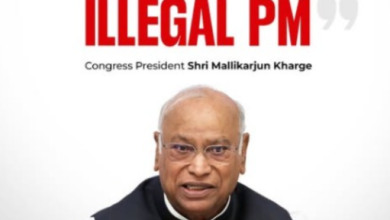
Observers note that Bihar’s politics remain dominated by upper-caste elites, with the ruling coalition resisting demands for a comprehensive caste census that could empower marginalized groups. Dalits, Muslims and OBCs remain fragmented across smaller parties, while targeted hate campaigns, bulldozing of minority homes and inflammatory speeches have deepened social alienation. The Congress, meanwhile, has accused the BJP of “vote manipulation” and using state machinery to influence the electoral process, alleging that “Operation Sindoor” and anti-Pakistan propaganda are being employed to mask corruption and maladministration.
As Bihar heads to the polls, the contest reflects the wider reality of Modi-era India — where nationalism is weaponized to mask governance failures, communal division becomes a tool of political consolidation, and propaganda overshadows policy. Despite visible public discontent, the BJP retains structural advantages through its control over media narratives, administrative machinery and digital outreach. Analysts say the Bihar elections will serve as a crucial test of how far manufactured nationalism and divisive politics can still override the urgent economic and social priorities of the Indian voter.