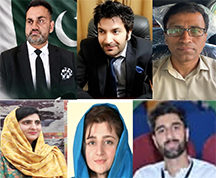
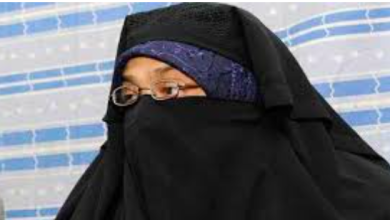
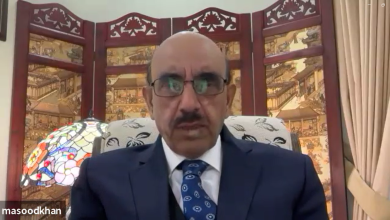
Kashmiri women face grave rights violations under militarization: Experts
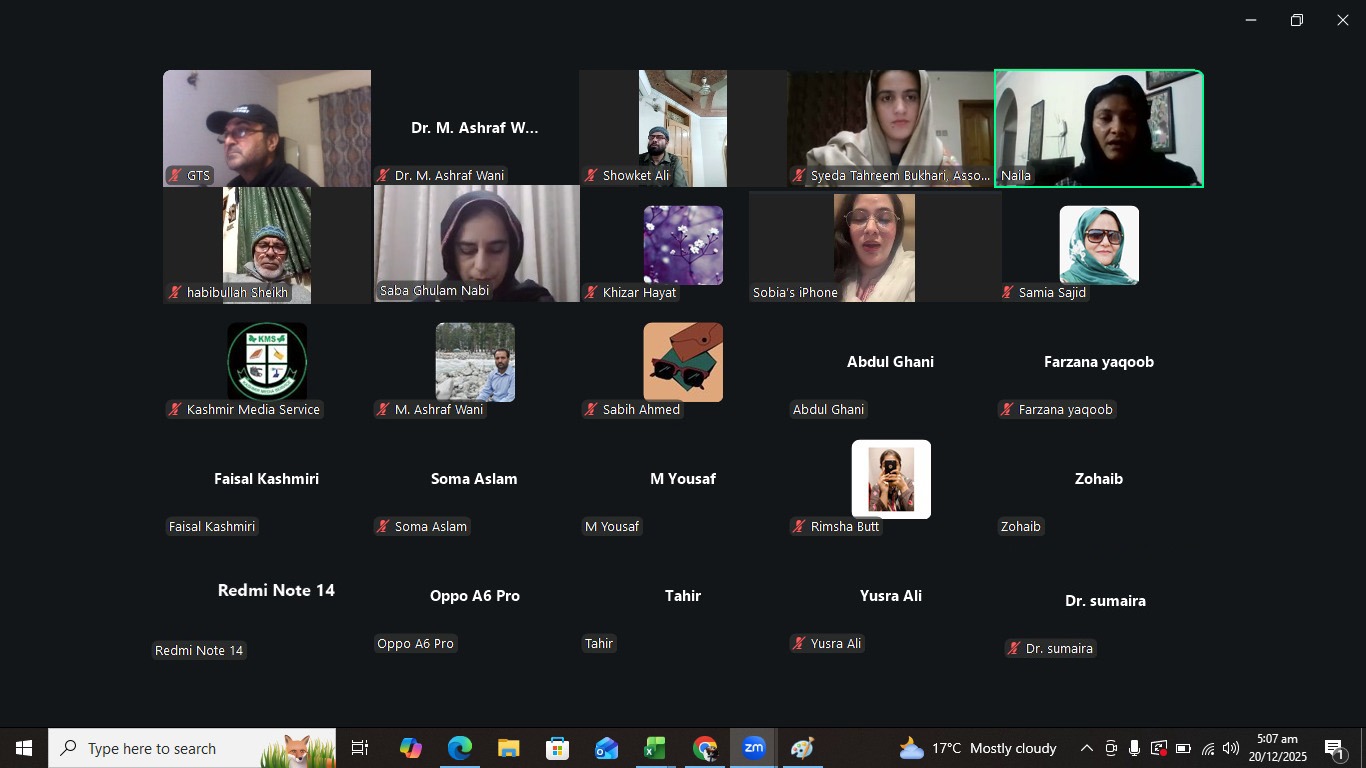
Islamabad: Speakers at a webinar on Sunday highlighted the silent suffering and resilience of Kashmiri women under prolonged militarisation, saying that women in Indian Illegally Occupied Jammu and Kashmir continue to face grave human rights violations amid an atmosphere of impunity and repression.
According to Kashmir Media Service, the webinar was jointly organised by Kashmir Media Service (KMS) and United Kashmir Journalists Association (UKJA). Titled “Suppression and Silent Suffering: Women’s Perspectives on Militarization in Kashmir,” the event was moderated by senior journalist Dr. Muhammad Ashraf and human rights activist Rais Ahmed Mir.
Speakers from diverse professional backgrounds examined political, legal, social and psychological dimensions of women’s suffering in IIOJK.
Former AJK minister and CEO Dastak, Farzana Yaqoob, said Kashmiri women had endured serious human rights abuses, referring to incidents such as Kunan Poshpora. She regretted that the issue had not been effectively projected at international forums despite global sensitivity towards women’s rights and stressed the need to inform the world about crimes committed against Kashmiri girls and women, including minors.
Principal Solicitor Sobia Shawl said India had failed to grant basic rights to the people of Kashmir and provided complete impunity to its forces through draconian laws such as the Armed Forces Special Powers Act (AFSPA), the Unlawful Activities (Prevention) Act (UAPA) and the Public Safety Act (PSA). She noted that enforced disappearances, arbitrary detentions and sexual violence constituted serious breaches of international humanitarian and human rights law.
Associate Director CISS-AJK, Syeda Tehreem Bukhari, highlighted the historical and contemporary role of Kashmiri women in the resistance movement, naming figures such as Parveena Ahangar, Asiya Andrabi, Asia Jilani and Zumrud Habib. She said these women had worked in different domains for the rights of Kashmiris, but their political agency and resistance were systematically obscured by dominant Indian narratives, despite women being key political actors in the struggle.
Human rights activist, anchorperson and PhD scholar Naila Altaf described resilience as central to Kashmiri women’s resistance, referring to Kashmiri poets such as Lala Arifa who, she said, not only celebrated the beauty of the chinar but also symbolised its fire and spirit of resistance. She said women had always shared the burden of sacrifice alongside men and called for encouragement of young women writers, scholars and activists who continued to preserve Kashmiriyat under repression.
Research Officer CISS-AJK, Saba Ghulam Nabi, highlighted the alarming deterioration of women’s health in Indian Illegally Occupied Jammu and Kashmir, particularly rising infertility, declining fertility rates, infant mortality and widespread mental health disorders. She said prolonged conflict, stress and militarisation had severely affected women’s reproductive health, with key indicators falling well below national averages. She added that constant fear, raids, harassment and political uncertainty had pushed many women into depression, anxiety and other psychological illnesses, while inadequate healthcare facilities further compounded their suffering.
Chairperson of All Jammu and Kashmir Muslim Conference Women Wing, Saima Sajid, said Kashmiri women remained resilient despite imprisonment, trauma, physical disabilities and sexual violence in areas such as Kunan Poshpora, Sopore and Kupwara.
Researcher on Kashmir conflict dynamics, Soma Aslam, said heavy militarisation, establishment of military installations and routine intimidation had severely disrupted daily life in IIOJK, particularly affecting women and children.