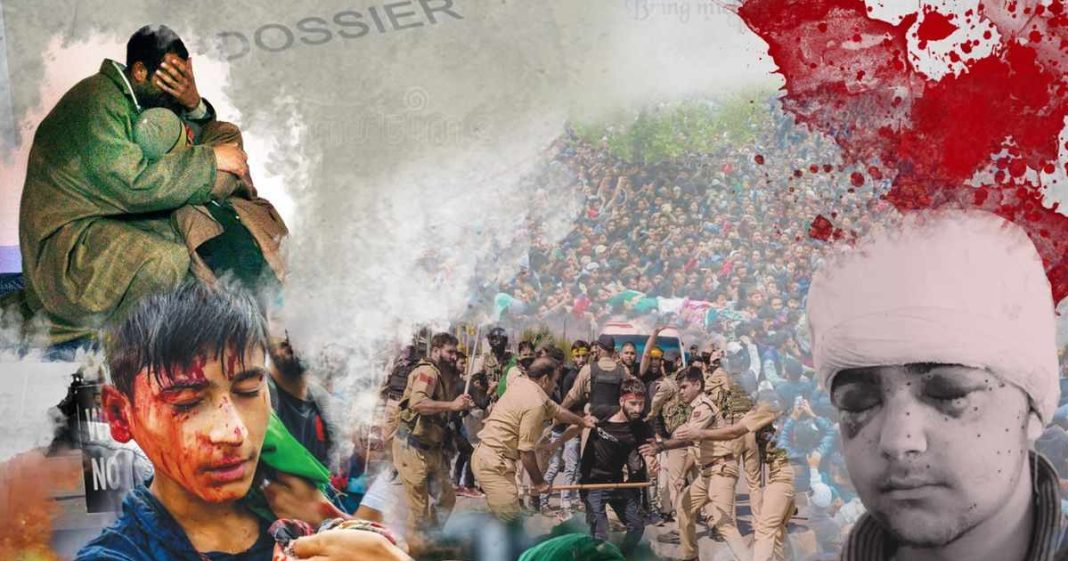
What is going on in Kashmir is not normal. As the sun rises over the picturesque landscape of the region, it is easy to believe that all is well. Beneath this scenic beauty, however, lies a harsh and unsettling reality marked by military occupation, the oppression of an entire population, and the pervasive expression of fear, loathing, and anger among the people of Indian illegally occupied Jammu and Kashmir. The image of normalcy and development that the Indian government seeks to project in the occupied territory is a myth.
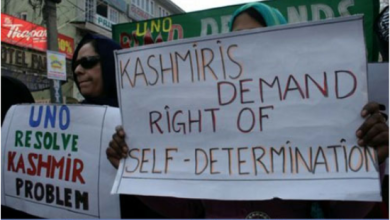
Kashmir has long captured the imagination of the Pakistani people and stirred deep emotions. This is partly due to shared religion, but also because Pakistan’s largest province, Punjab, and its ruling elite share close ethnic and cultural ties with Kashmir. For more than seven decades, Kashmir has remained the epicenter of a bitter dispute between India and Pakistan. In an effort to resolve the conflict, the United Nations Security Council adopted Resolution 47 in 1948, followed by more than a dozen subsequent resolutions. These resolutions stipulate that the final disposition of the State of Jammu and Kashmir must be determined by its people through a free and impartial plebiscite conducted under UN auspices. Both India and Pakistan accepted these resolutions and, under Article 25 of the UN Charter, are legally obligated to implement them.

Despite this, India has pursued a series of illegal actions, committing gross and systematic violations of human rights that continue to this day. In the period leading up to August 5, 2019, India increased its military deployment in IIOJK to approximately 900,000 troops, creating the densest military occupation in recent history, with roughly one soldier for every eight Kashmiri men, women, and children. This massive force has carried out a brutal campaign of repression, including extrajudicial killings in fake encounters, custodial deaths, cordon-and-search operations, the use of pellet guns that have killed, maimed, and blinded peaceful protesters, enforced disappearances, and collective punishment through the destruction and burning of entire villages and urban neighborhoods.
This campaign is driven by the ideology of Hindutva, which promotes Hindu religious and ethnic supremacy and fosters hatred against Muslims. Recognizing this pattern, Genocide Watch has warned that “the Indian government’s actions in Kashmir have been an extreme case of persecution and could very well lead to genocide.”
For decades, Indian authorities have relied on censorship and surveillance to suppress the voices of the Kashmiri people. Since August 2019, information control has been fully institutionalized. Journalists, lawyers, human rights defenders, and much of the Kashmiri political leadership are routinely incarcerated, beaten, humiliated, harassed, and even accused of “terrorism” for documenting and reporting human rights violations in IIOJK.
In today’s world, governance rooted in 19th-century fascist practices should not be tolerated. More people have lost their lives due to border shelling than during declared wars between Pakistan and India. Narendra Modi’s forceful annexation of Kashmir has unleashed a renewed wave of fear and repression, marked by prolonged curfews, internet blackouts, escalating violence, and killings. Kashmir is not becoming safer; it is becoming increasingly insecure and unsustainable for the Indian government to govern, with destabilizing consequences for the entire region. The only normality that exists is the normalization of violence.
Generations of Kashmiris have grown up witnessing violence, insecurity, and trauma. Numerous human rights organizations, international bodies, and independent investigations have documented the use of rape, sexual assault, and harassment by Indian forces against Kashmiri civilians, particularly women, as a weapon of war. In an attempt to erase the ethno-religious identity of Kashmiris, historical and cultural heritage sites have been damaged or destroyed. Among the most distressing acts is the demolition of religious sites, particularly mosques, which inflicts deep psychological and emotional wounds on the Muslim population.
In what resembles a classic settler-colonial project, India has initiated illegal demographic changes in the occupied territory, in blatant violation of international law, including the Fourth Geneva Convention. These measures are central to India’s plan to transform IIOJK from a Muslim-majority region into a Hindu-majority territory in order to dilute demands for freedom and self-determination. Kashmiri land and property have also been confiscated for military and official use.
To delegitimize the indigenous Kashmiri struggle for self-determination, India falsely claims that it is instigated by Pakistan. To counter this narrative, Pakistan has proposed expanded patrolling by the United Nations Military Observer Group in India and Pakistan (UNMOGIP) along the Line of Control in Jammu and Kashmir. India, however, has refused to allow the UN mission to patrol or expand its mandate. Despite repeated appeals, India continues to deny access to Jammu and Kashmir to the Office of the High Commissioner for Human Rights, other UN agencies, international humanitarian organizations, and global media.
Pakistan seeks peaceful relations with all its neighbors, including India, and has responded with responsibility and restraint to India’s repeated provocations. In contrast, India continues to employ aggressive rhetoric and issue threats of force against Pakistan, even under the shadow of nuclear weapons. The responsibility lies with India to create conditions conducive to meaningful dialogue for resolving the Jammu and Kashmir dispute.
The international community must play a proactive role in compelling India to respect the human rights of the Kashmiri people and to work toward a peaceful and inclusive resolution of the conflict. Peace in South Asia will remain elusive until the Jammu and Kashmir dispute is resolved. The UN Security Council and the UN Secretary-General must make concerted efforts, as empowered by the UN Charter, to promote a peaceful settlement in accordance with relevant Security Council resolutions and the wishes of the Kashmiri people.
For Pakistan and India, Kashmir is not a distant land that can be abandoned at will. Both countries share borders, cultures, traditions, and deep historical ties with the Kashmiri people. Standing for the rights of Kashmiris may be exhausting and politically taxing, but it is fundamentally just. As divisive as the issue is, both Pakistan and India must recognize why resolving it is imperative.
Kashmir demands urgent attention, as the present situation carries immense human and regional costs while benefiting only a few. There can be no peace in one part of the region while another continues to bleed. Kashmir does not suffer alone; Pakistan and India bleed with it. As long as Kashmir remains trapped in militarization, killings, sexual violence, and draconian policies, instability will continue to spill across the region.
This is why Pakistan has consistently emphasized resolving the Kashmir issue-first and foremost for the Kashmiri people, and ultimately for regional stability. In many ways, the unrealized potential of India, Pakistan, and Kashmir itself remains hostage to the persistence of the status quo. Contrary to reductionist realist arguments, principles matter in policymaking and international relations, particularly over the long term.
The international community must therefore fulfill its responsibility to support a peaceful resolution of the Kashmir dispute. Preventive measures to halt abuses in IIOJK and to ensure global accountability are both moral imperatives and collective human rights responsibilities. Millions of Kashmiris have suffered for far too long. They seek a peaceful resolution to end their ordeal. It is time to make peace the new normal.
The writer is a seasoned professional and can be reached at tbjs.cancer.1954 @gmail.com