Paparo’s visit underscores India’s growing dependence on Washington’s security architecture
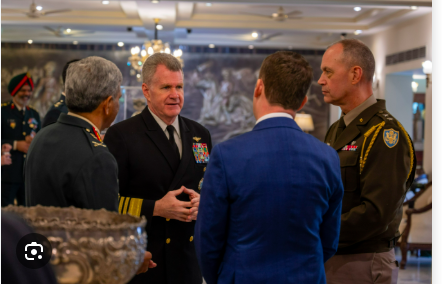 Islamabad: The visit of Samuel Paparo, head of United States Indo-Pacific Command, underscored India’s growing dependence on Washington’s security architecture.
According to Kashmir Media Service, hosted by Sergio Gor, Ambassador of the United States of America to the Republic of India, the optics suggested deference rather than equal partnership.
India has also faced a credibility deficit in the information domain. Its claims about strikes on targets in Karachi, Islamabad and Lahore were widely questioned by international media. Several US assessments reportedly contradicted elements of the Indian narrative, and statements attributed to Donald Trump were seen as endorsing Pakistan’s position regarding aerial engagements and Indian jet losses.
Indian officials appeared eager to align their messaging with US priorities. Reports indicate that briefings on “Operation Sindoor” were tailored to focused on feeding a one-sided narrative to US authorities.


The structural reality is telling. India falls under INDOPACOM, while Pakistan lies within US CENTCOM. Washington manages the region through separate command lenses. India’s overt accommodation of Indo-Pacific leadership signals subordination to US regional oversight, raising serious doubts about its claims of strategic autonomy.
Against this backdrop, the high-profile reception of Indo-Pacific leadership appeared designed to recover lost prestige and secure diplomatic cover. Rather than demonstrating strategic autonomy, the episode reflected an attempt to offset reputational damage through visible alignment with US military authority.