Kunan Poshpora: From Trauma to Tribunal — A morning or mourning for Kashmir
Dr. Waleed Rasool
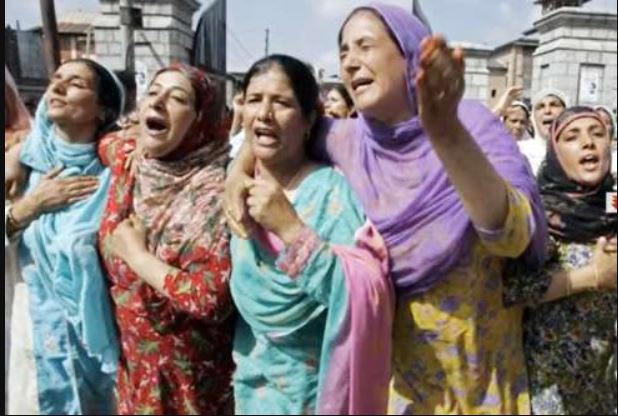
 On the night of 23 February 1991, the twin villages of Kunan and Poshpora in Kupwara district, Indian illegally occupied Jammu and Kashmir, were placed under cordon by the 4th Battalion of the Rajputana Rifles, a unit of the Indian Army engaged to curb the freedom struggle. It was a dark midnight operation. Villagers were awakened and ordered out of their homes. The men were assembled on the road and kept under guard, while the women were instructed to remain inside their homes.
The familiar justification was offered: freedom fighters were allegedly hiding in the village, a routine claim often invoked to justify search operations.


However, this was not a routine operation. The separation of men from women was systematic, creating deliberate vulnerability. What followed has since been described by survivors as one of the gravest instances of collective sexual violence in the history of the Kashmir conflict. Multiple women — young girls, married women, elderly mothers —were subjected to rape and sexual assault during the night-long operation. The men, held at a distance throughout the day, had little knowledge of what was unfolding inside their homes. The design of the operation ensured isolation, silence, and impunity.
In Kashmiri society, where honour and social dignity are deeply embedded, sexual violence often goes unreported due to stigma, fear, and social consequences. Yet the scale of the violence in Kunan Poshpora was so extensive that silence became impossible. This was not an isolated accusation — it was collective testimony.
An FIR was registered at Trehgam Police Station. Medical examinations were conducted. A local magistrate’s preliminary inquiry reportedly found the allegations prima facie credible. However, momentum toward accountability soon slowed. In mid-1991, a team from the Press Council of India, led by journalist B.G. Verghese, was engaged in the the matter who told the line of the occupational forces and dismissed the allegations. Subsequently, the case was marked as “untraced” by local authorities. No member of the 4th Battalion was booked or persucuted, a pattern always observed in these matters in Kashmir as who will dare to go against Indian forces.
It was at this juncture that the case moved from trauma to tribunal, becoming entangled in what many describe as systemic delay. For two decades, the victims run from pillar to post but case remained dormant till the Rajputana riffles was transferred. In 2011, survivors petitioned for reinvestigation. In 2013, a Judicial Magistrate rejected the police closure report and ordered further investigation, including proceedings related to compensation. The state challenged this order. By 2018, proceedings were ongoing before the Jammu and Kashmir High Court. Yet no conclusive criminal accountability emerged.
Following the constitutional changes of 5 August 2019 and the reorganization of occupied Jammu and Kashmir, legal proceedings became further complicated. More than three decades after the henious crime, the promise of justice remains unfulfilled.
Under the Geneva Conventions, civilians in situations of armed conflict are entitled to protection. Sexual violence against civilians constitutes a grave breach and may amount to a war crime under international humanitarian law. Additionally, the human rights framework of the United Nations — including conventions addressing discrimination and violence against women — obligates states to conduct prompt, impartial, and effective investigations into allegations of sexual violence.When investigations are delayed, diluted, or institutionally obstructed, the issue moves beyond individual criminal liability and enters the domain of structural impunity.
Justice delayed, in such contexts, risks becoming justice denied.
Kunan Poshpora was not the first case of sexual violence in the Kashmir conflict. But the scale of the accusations, the number of victims, and the subsequent institutional response transformed it into a defining case. For many, it symbolises not only trauma, but the architecture of delay. Over three decades have passed. There have been on definitive criminal convictions, no completed judicial reckoning.
Kunan Poshpora remains a wound on the conscience of Kashmir.
The central question persists: When justice is controlled by the very structures accused of wrongdoing, whose interpretation prevails? History suggests that truth may be suppressed, but it cannot be permanently silenced. The evidence will speak and justice cannot be caged by the occupation forever.