New Delhi escalates militarisation in IIOJK with fresh armoured fleet push
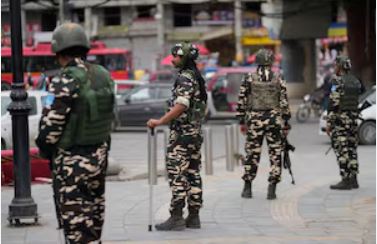
New Delhi: Indian has initiated the procurement of 159 new bullet-proof troop carriers for deployment in Indian illegally occupied Jammu and Kashmir, signalling a renewed push to enhance its military capabilities in the territory.
According to Kashmir Media Service, the latest Request for Information (RFI), issued by the Indian Army, outlines plans to deploy heavily armoured, high-mobility bullet-proof troops carriers (BPTCs) across operational zones in IIOJK including Ladakh. These vehicles are intended for Rashtriya Rifles battalions, sectors and force headquarters operating in the occupied territory. These carriers are designed to operate in extreme terrains and hostile environments.
Designed for operations in extreme terrains, the BPTCs will feature advanced ballistic protection and combat capabilities. The RFI sets a minimum delivery rate of 60 vehicles per year following the award of the contract.


Envisioned as 4×4 platforms, the vehicles will function as right-hand-drive protected buses capable of carrying up to 30 personnel, including a driver and co-driver, with a payload capacity of approximately three tonnes. Given the territory’s challenging geography, the carriers are required to achieve speeds of 80–100 kmph on roads and 50–75 kmph off-road, with an operational range of 350 kilometres on plains and 300 kilometres in mountainous terrain. The vehicles must also remain fully operational at altitudes of up to 5,000 metres and in temperatures ranging from minus 10°C to plus 40°C—conditions typical of Ladakh’s high-altitude passes and the Kashmir Valley’s seasonal extremes. As per specifications, the carriers will provide NATO STANAG Level III ballistic protection across all surfaces, offering resistance against 7.62mm armour-piercing rounds.
Additionally, the BPTCs will be equipped with a roof-mounted gunner’s hatch featuring 360-degree traverse, designed to mount a 7.62mm machine gun with elevation and depression arcs of +45 and -5 degrees, alongside multiple firing ports for onboard troops.
The development highlights New Delhi’s continued reliance on military expansion rather than political engagement, as IIOJK witnesses persistent reinforcement of forces. The induction of such armoured platforms is likely to enhance mobility and operational each of occupying troops, particularly during cordon and search operations and, raising concerns over the potential of intensified crackdowns on the Kashmiris.
Observers view the move as part of a broader strategy on part of India to modernise occupation infrastructure and further entrench control mechanisms in IIOJK, where residents have long voiced concerns over heavy militarisation and its impact on daily life.