Ladakh redistricting under fire; Leaders warn of social fragmentation
Move seen as diluting core demands, expanding bureaucratic control
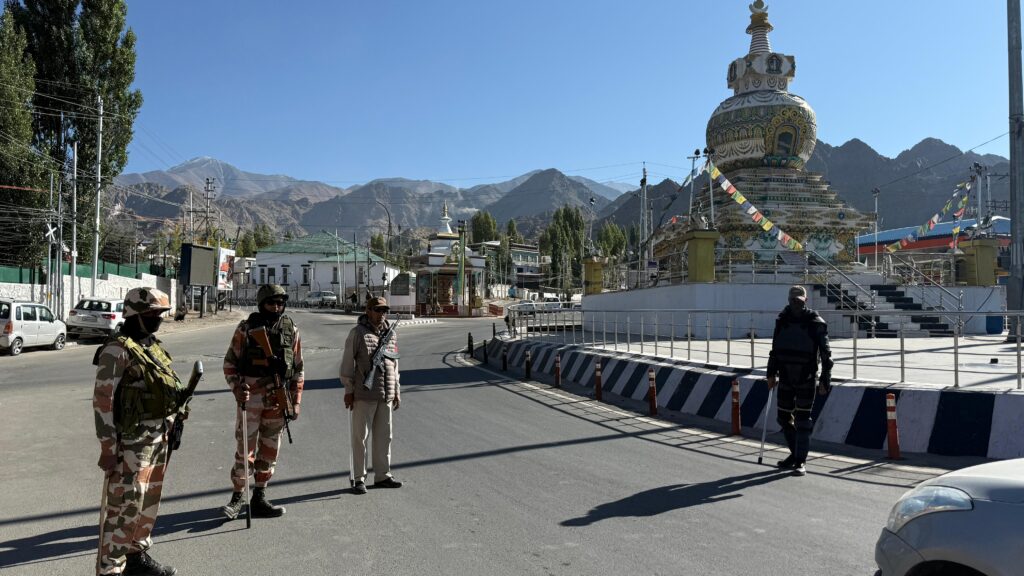
Leh: The redrawing of Ladakh’s administrative boundaries has sparked fresh controversy, with critics saying that the move seeks to alter the region’s demographic and political balance by confining the Muslims, who are in majority in the region to two districts, while placing the remaining five districts under Buddhist-majority dominance.
According to Kashmir Media Service, the decision to increase the number of districts from two to seven, first announced in 2024 by New Delhi, has sparked allegations of gerrymandering against the BJP-led Indian government, which has faced mounting criticism since Ladakh was carved out as a Union Territory without a legislature in 2019 following the revocation of the special status of Indian illegally occupied Jammu and Kashmir.
As per a recent gazette notification, the Muslim-majority districts of Kargil and Drass will together comprise 99 revenue villages, while five newly structured districts with Buddhist-majority populations—Sham, Changthang, Nubra, Leh, and Zanskar—will account for 151 villages. Based on the 2011 Census, Ladakh has a population of around 2.7 lakh, with Muslims forming 46.40% and Buddhists 39.65%. Earlier, Ladakh had only two districts, with Leh district comprising 1.3 lakh people while the population of Kargil was estimated at 1.4 lakh, as per the 2011 Census. Nubra, Sham and Changthang have been carved out from Leh while Zanskar and Drass have been redrawn from Kargil.

Observers and local leaders have expressed concern over the implications of the move. Sidiq Wahid, a prominent Ladakhi academic and former vice-chancellor of the Islamic University of Science and Technology in Kashmir, termed the decision “deeply concerning”. He said, ‘It has resulted in reactions ranging from trepidation to suspicion”, warning that it risks fragmenting Ladakhi society and undermining the unity developed in recent years between Buddhist and Muslim communities. He noted that the restructuring effectively reduces Muslims to a minority in five of the seven districts, creating what he described as a “palpably undemocratic arrangement,” given that Muslims constitute a slight majority in the region.
Chering Dorjay Lakruk, co-chairman of the Leh Apex Body, which along with the Kargil Democratic Alliance (KDA) has been spearheading a pro-democracy movement in Ladakh, criticized the move as a political maneuver. “It is an attempt to appease a section of people while diluting our core demands of statehood and Sixth Schedule status. It does not address the broader political and cultural concerns of the people,” he said.
Echoing similar concerns, prominent Ladakhi activist Sajjad Hussain who is the executive member of KDA said that the new districts would add “another layer of bureaucratic control” over Ladakh. “It is an attempt to dilute our demand for Sixth Schedule and statehood”.