A Life of Defiance and Thought: The Enduring Legacy of Muhammad Ashraf Sehrai
Mushtaq Hussain
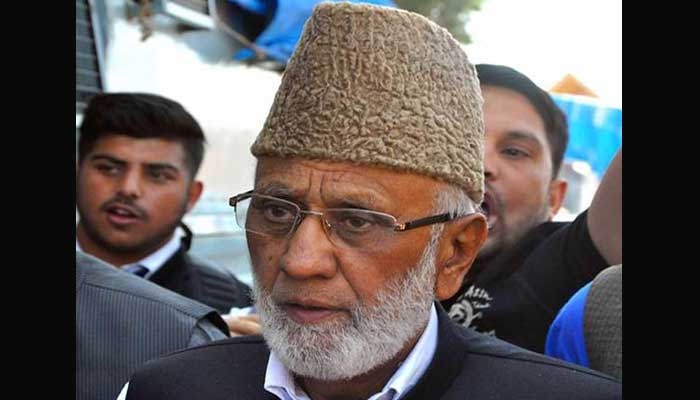
In the modern history of Kashmir, few figures embody the convergence of intellectual rigor, political conviction, and personal sacrifice as completely as Muhammad Ashraf Sehrai. His life was not merely a sequence of political engagements but a sustained moral and ideological project—one that sought to shape minds, fortify collective identity, and sustain a movement under extraordinary pressure. To understand Sehrai is to understand a particular strand of Kashmiri resistance: one rooted as much in ideas and education as in political defiance.
Sehrai’s public life unfolded across multiple arenas—student organization, education policy, journalism, and political leadership—yet these domains were never separate in his thinking. They formed a coherent framework centered on what he believed to be the essential prerequisites for a resilient society: intellectual clarity, moral discipline, and an unyielding sense of collective purpose.

His early prominence came through his role as a founding member and the first chief organizer (Nazim-e-Aala) of Islami Jamiat-e-Talaba in Indian illegally occupied Jammu and Kashmir. At a time when student politics in the region was fragmented and often reactive, Sehrai helped articulate a structured vision for youth engagement. Under his leadership, the organization emphasized ideological grounding alongside academic development. He saw students not as passive recipients of education but as future custodians of a social and political cause. This dual emphasis—on scholarship and conviction—would remain a defining feature of his life’s work.
Education, in Sehrai’s worldview, was never a neutral enterprise. Although he did not serve as a formal administrator within the school network run under the Falah-e-Aam Trust (FAT), his influence on its intellectual direction was significant. As a senior leader of Jamaat-e-Islami IIOJK, he contributed to shaping the policy orientation of the system. His vision was clear: Kashmiri society required an educational model that harmonized Islamic ethical foundations with the demands of modern knowledge. He believed that without such synthesis, a generation risked either cultural dislocation or intellectual stagnation. The FAT system, with its emphasis on moral instruction alongside contemporary curricula, reflected this balance—an approach that continues to influence debates on education in the region.
If education formed the long-term axis of Sehrai’s strategy, journalism was his immediate instrument. He served as the editor of the daily newspaper Azaan, where his writing combined clarity with conviction. His editorials were not merely reactive commentaries; they sought to frame events within a broader ideological narrative. He treated journalism as a public trust—an arena where truth-telling was inseparable from responsibility.
Even more revealing of his intellectual temperament was the monthly magazine Tulu, which he launched in 1969 from Sopore. In many ways, Tulu was a one-man enterprise: Sehrai was its editor, designer, and principal writer. The publication became a platform for political analysis, social critique, and literary expression. Among its most distinctive features was a recurring column on “Pakistani day-to-day affairs.” This column, far from being a routine digest, demonstrated Sehrai’s analytical range and his ability to situate Kashmir within a wider regional context. It reflected a mind attentive to geopolitical currents, yet anchored in local realities. Through Tulu, he cultivated a readership that was encouraged not just to consume information but to interpret it critically.
Sehrai’s transition from intellectual activism to overt political confrontation reached a defining moment in the 1970s, when he contested elections from Ganderbal against Sheikh Abdullah. To appreciate the significance of this decision, one must recall the atmosphere of that period. Sheikh Abdullah enjoyed not only immense political influence but also the backing of state institutions and, as widely perceived, India’s security apparatus. Reports of intimidation by auxiliary groups—locally referred to as “Goga” and “Khufatan Faqeer”—contributed to an environment where opposition was fraught with personal risk.
In such a context, Sehrai’s candidacy was more than a political act; it was a statement against the normalization of fear. Contesting the election signaled his refusal to concede the public sphere, even under conditions that rendered dissent perilous. It also underscored a recurring theme in his life: the belief that symbolic acts of defiance can reshape collective psychology.
Over time, Sehrai became closely associated with Syed Ali Geelani and emerged as a key figure within the Tehreek-e-Hurriyat. When he assumed its leadership in 2018, he inherited not only an organization but also the expectations of a movement facing evolving challenges. His approach combined continuity with adaptation. While he remained committed to long-held positions, he also recognized the need to sustain public engagement through changing circumstances.
Central to Sehrai’s political outlook was his assessment of India’s policies in Kashmir. He frequently described them as systematic efforts to erode political identity and suppress dissent. Whether one agrees with this characterization or not, it is clear that his response strategy was multi-layered. He emphasized the importance of intellectual resistance—maintaining a narrative that could counter official accounts. He also stressed organizational resilience, ensuring that structures remained functional despite restrictions. Above all, he advocated for moral steadfastness, arguing that a movement’s credibility depends on its adherence to its own principles.
Perhaps the most poignant illustration of Sehrai’s convictions came not in public speeches but in deeply personal moments. When his son, Junaid Sehrai, announced his decision to join the armed resistance, the move subjected the family to intense scrutiny and pressure. Accounts suggest that attempts were made to persuade or coerce Sehrai into intervening. His response, however, was consistent with his broader worldview. He is widely quoted as saying that all those engaged in the resistance were like his own children—an expression that blurred the line between personal and collective identity.
The aftermath of his son’s martyrdom further revealed the depth of this stance. In line with prevailing practices, the body was not returned to the family but buried at an undisclosed location. Friends reportedly urged Sehrai to seek special intervention. He declined, stating that he could not claim an exception denied to others. In that decision lay a stark articulation of equality—an insistence that personal grief could not override collective experience.
Sehrai’s own death on May 5, 2021, while in custody in a hospital in Jammu, added a final, somber chapter to his life story. It intensified debates around detention practices and the treatment of Kashmiri political detainees, while also cementing his status among supporters as a figure of steadfastness.
Assessing Sehrai’s legacy requires moving beyond binaries. To some, he remains a principled leader who dedicated his life to what he saw as a just cause. To others, his positions may invite critical scrutiny within the broader and complex discourse on Kashmir. Yet even across differing perspectives, certain aspects of his life command attention: his commitment to education as a tool of identity formation, his use of journalism as a vehicle for narrative-building, and his willingness to align personal choices with public principles.
In an era when political life often bends toward expediency, Sehrai’s trajectory offers a contrasting model—one defined by consistency, whether in the classroom, the newsroom, or the political arena. His story invites readers not only to learn about a man but to grapple with the ideas he represented: the interplay between education and resistance, the ethics of leadership, and the enduring power of conviction in shaping both individual lives and collective histories.
References:
• Archival issues of Azaan (Daily)
• Tulu Magazine, Sopore (1969 editions)
• Organizational records of Jamaat-e-Islami Jammu & Kashmir
• Statements and documents of Tehreek-e-Hurriyat Jammu & Kashmir
• Reports and analyses published in regional and international media (2021)