Book on Operation Bunyanum Marsoos highlights Pakistan’s historic military success
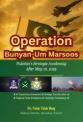
Islamabad: A recently launched book titled “Operation Bunyanum Marsoos: Deterrence, Doctrinal Shifts, and Strategic Stability in South Asia” documents what is being described as a historic military triumph for Pakistan while offering an in-depth analysis of the evolving strategic landscape in South Asia.
According to Kashmir Media Service, a ceremony marking the launch of the book was recently organized by the Centre for International Strategic Studies (CISS) in Islamabad, marking the first anniversary of Operation Bunyan-um-Marsoos. The publication features contributions from prominent scholars, diplomats and retired military officials, examining key themes including deterrence stability, crisis management, regional security dynamics and evolving strategic doctrines in South Asia.
The book presents Operation Bunyanum Marsoos as a defining moment in Pakistan’s defence history, detailing how Pakistan’s Armed Forces successfully intercepted India’s Operation Sindoor in May 2025 and delivered a calibrated response that neutralized several high-value Indian military targets.
A central feature of the publication is its account of what it describes as the “greatest air dogfight” during which the Pakistan Air Force shattered the perceived invincibility of India’s Rafale fighter jets by downing six aircraft, setting a new benchmark for air superiority and deterrence by denial against Pakistan’s high-tech adversary.
The book also highlights Pakistan’s precision strike capabilities, asserting that no defensive shield can guarantee absolute protection against a determined and technologically capable response. It analyzes the shift in India’s military doctrine towards limited warfare and punitive strikes, while emphasizing how Pakistan’s Quid Pro Quo Plus strategy successfully debunked India’s new normal of unanswered cross-border strikes, forcing a return to strategic restraint.
Underscoring Pakistan’s role in maintaining strategic stability without escalating to the ultimate level, the book argues that Pakistan prevented a catastrophic all-out nuclear conflict by demonstrating overwhelming conventional military competence and effectively handling intensive high-tech aggression below the nuclear threshold.
The publication further explores the growing importance of synchronized warfare, detailing how kinetic strikes were bolstered by a sophisticated cyber campaign that reportedly paralyzed 70% of India’s northern power grid and military communication networks, causing strategic paralysis within the Indian war machinery.
Contrasting India’s reliance on disinformation warfare with Pakistan’s strategic maturity, the book states that Pakistan secured a narrative victory through transparent communication and factual evidence, contributing to India’s diplomatic isolation and international calls for de-escalation.