Blinding the Narrative: Bollywood’s Grim Apologia for the Pellet Gun
Chauhan is, in essence, another pellet fired, this time at the collective conscience of the Indian audience
Mukhtar Baba
 The annals of the Kashmir Valley are routinely defiled by the cruel ironies of state overreach, yet few chapters are quite as gruesome as that of the “pellet gun.” This weapon, introduced under the sanitised, almost Orwellian euphemism of “non-lethal force,” has written the most horrific pages of the region’s contemporary history. It was never a tool of crowd control, it was a calculated stratagem that plunged an entire generation into perpetual darkness, shredding the dreams, futures, and physical existence of Kashmiri youth.
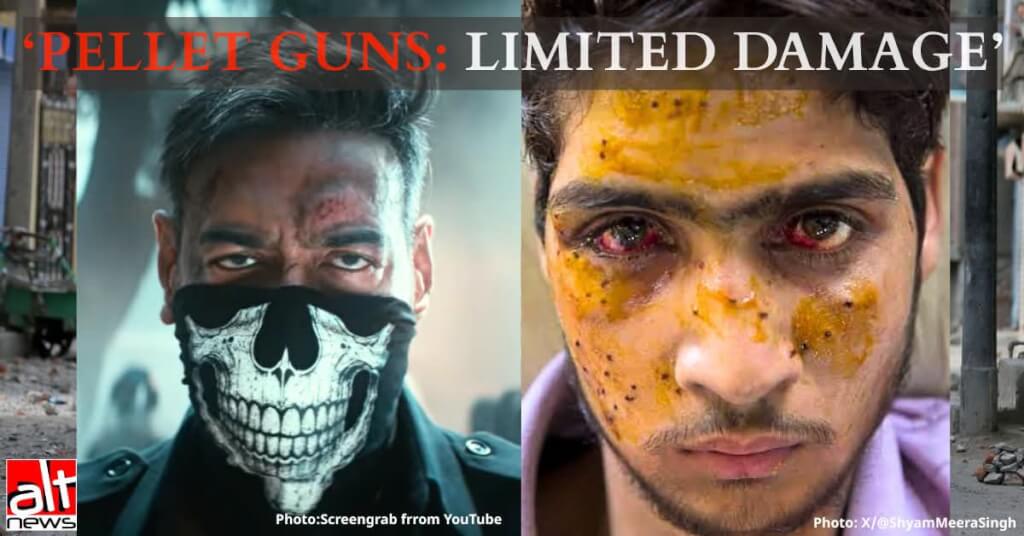
Yet, as the physical scars of this policy harden into historical trauma, we are confronted with an equally sinister sequel, the moral abdication of the Indian film industry. Enter Chauhan, Bollywood’s latest cinematic apologia, which seeks with spectacular vulgarity to justify an affront to human conscience.
To understand the sheer cynicism of Chauhan, one must recall the reality it attempts to whitewash. When the muzzles of these modified shotguns were opened upon unarmed protestors in 2010 and with devastating frequency in 2016, in the occupied Kashmir Valley, the establishment assured the international community that this was a “humane” alternative to live ammunition.
The medical wards of Srinagar told a radically different story. The tiny lead and iron pellets discharged from these cartridges did not merely disperse crowds, they tore through flesh and permanently extinguished the gift of sight. There was not a hospital in the Valley that did not resemble a field infirmary, populated by twelve- and thirteen-year-old children lying in rows, their eyes tightly swathed in blood-soaked bandages.
Thousands of youth, women, and even infants in cradles fell victim to this shrapnel rain. Those who escaped total blindness were left permanently dependent, physically maimed, and psychologically shattered. Modern colonial history offers few parallels where a state has systematically and deliberately blinded an occupied populace to crush political dissent. It was an act of mass incapacitation disguised as law and order.
Packaging Cruelty as Patriotism
The contemporary ethos of Bollywood has long ceased to be an enterprise of art or genuine cinema. It has morphed into an ideological arm of the state, a highly lucrative machinery dedicated to appeasing the ruling elite and marketing a majoritarian agenda to the masses. Chauhan is simply the latest cog in this propaganda wheel.
The film’s narrative engine relies on a dangerous falsehood, it projects a “patriotic” Army official who reluctantly but heroically resorts to the pellet gun to combat “anti-national elements.” Audiences seated in the comfortable dark of multiplexes are fed a insidious message, the Kashmiri standing across the line is not a human being possessed of rights, but a target whose blinding is a geopolitical necessity.
Masquerading state cruelty as “tragic compulsion” or “glorious valor” has become Bollywood’s newfound fixation. If previous ideological blockbusters laid the foundations of this animosity, Chauhan merely applies a fresh coat of plaster to the architecture of hate. It turns the mutilation of children into a popcorn spectacle.
The Incorruptible Court of History
The architects of this film operate under the delusion that blood spilled and eyesight stolen can be washed away by cheap scripts, jingoistic monologues, and a stirring background score. They are wrong. Cinema can veil the truth temporarily, but it cannot rewrite the ledger of human suffering. In the final court of history, these filmmakers will stand in the exact same moral dock as the politicians who sanctioned the weapons.
The sterile hospital corridors of Kashmir, where young souls must now hold the hands of others just to take a few steps in the dark, remain infinitely more real, visceral, and permanent than any celluloid fiction Bombay can concoct.
Chauhan is, in essence, another pellet fired, this time at the collective conscience of the audience. It may well rake in millions at the box office and garner the frenzied applause of chauvinists, but it can never obscure the scars of Kashmir. It remains an indelible blot on the brow of a nation that boasts of its democratic credentials. The silver screen may be white, but the history Bollywood is writing upon it is dyed in the deepest, most unforgivable black.
The writer is a Kashmiri journalist based in Islamabad.