Kashmiri politicians slam Modi govt’s bills, warn of authoritarian shift
 Srinagar: In Indian illegally occupied Jammu and Kashmir, Kashmiri politicians have sharply criticized the introduction of three bills in the Lok Sabha by the BJP-led Indian government. These bills propose the removal of the Prime Minister, Chief Ministers and other ministers if they remain in custody for more than 30 days.
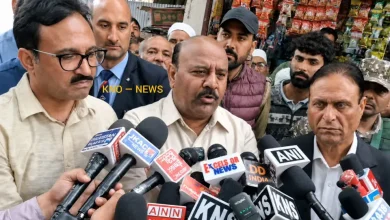
According to Kashmir Media Service, IIOJK Congress chapter president Tariq Hameed Karra expressed his concerns stating that the bills represent a deeper shift from democracy to autocracy. He pointed out that the timing and intent behind these proposals appear to be aimed at controlling dissent and consolidating executive power. “Rather than further strengthening the states and restoring statehood to Jammu and Kashmir, they have shown the whole world their authoritarian mindset and authoritarian attitude under which they are trying to tighten the noose around the neck of a CM or a minister of any state,” Karra said.
He further emphasized that New Delhi should respect the wishes and aspirations of the people of IIOJK. “They played with the identity of the people of J&K, took away their constitutional guarantees, the protection of land, resources and jobs. Now, rather than respecting the wishes and aspirations of the people of J&K, they are showcasing their anti-Kashmir mindset once again,” Karra added. He warned that what is happening in occupied Jammu and Kashmir today could set a precedent for similar centralised actions in other states tomorrow.
Another Congress leader Ghulam Ahmad Mir strongly criticised the BJP government for drafting what he described as “more stringent” laws for States, Union Territories, including IIOJK. He argued that the new provisions would weaken the federal structure and reduce the powers of elected governments. He said that the Kashmiri people were expecting the restoration of statehood to IIOJK, not “another attack on democracy.”
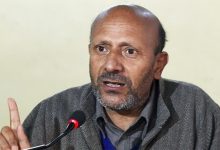
National Conference spokesperson, Imran Nabi Dar, termed some provisions of the bills as draconian, pledging strong opposition. He called for a “relook” at the legislation, hoping that the concerns raised by the Opposition on the bills would be addressed.
NC legislator Salman Sagar said Kashmir people expected statehood restoration, but instead, the Modi govt was undermining their demand to end the IIOJK Reorganisation Act, not strengthen it.
The Communist Party of India (Marxist) also condemned the move describing it as an “anti-democratic” attempt to circumvent established legal procedures and undermine the principles of accountability and balance of power. In a statement, the party said, “Given the neo-fascistic tendencies of the present government, this will obviously be used as a weapon to target opposition state governments.”
The CPI(M) asserted that it would resist the legislative proposal with “all the strength at its command” and called upon other opposition parties to jointly oppose the move.
Notably, the three bills introduced by Indian Home Minister Amit Shah, are: The Government of Union Territories (Amendment) Bill 2025; the Constitution (One Hundred And Thirtieth Amendment) Bill 2025; and the Jammu and Kashmir Reorganisation (Amendment) Bill 2025. These bills propose that if prime minister, cabinet ministers or chief ministers, are arrested and detained in custody for 30 consecutive days for offences that attract a jail term of at least five years, they will lose their jobs on the 31st day.
As soon as the bills were introduced, opposition members stormed the well of the Lok Sabha, raising slogans and some even tore copies in front of Amit Shah. Later, the House decided to refer the bills to a Joint Committee of Parliament comprising 21 members from Lok Sabha and 10 from Rajya Sabha for further scrutiny. The committee, whose members will soon be named, has been asked to submit its report to the House by the last day of the first week of the next session, expected in the third week of November.