India reeling under Modi’s mistakes as US tariffs hit economy hard
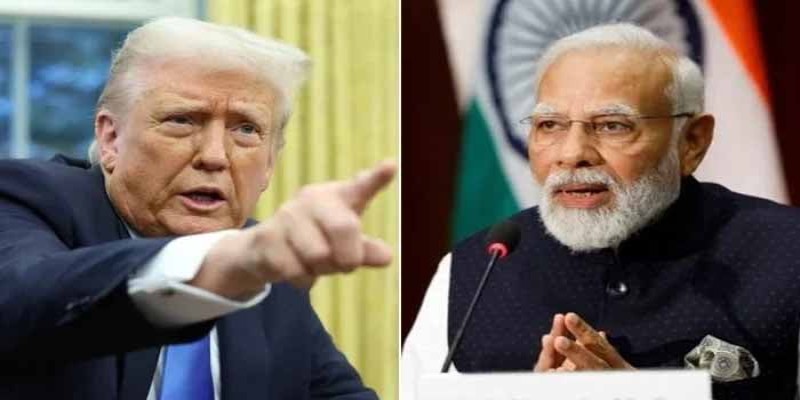
Islamabad: The sudden imposition of tariffs by US President Donald Trump has sent shockwaves through the Indian economy , exposing the failures of the Modi government’s economic and diplomatic strategies.
According to Kashmir Media Service, the 50% tariff on India’s £65 billion worth of exports has shaken the country’s economic foundations, pushing sectors such as textiles, jewelry, seafood, and leather to the brink of collapse. Experts estimate a direct loss of £41–45 billion, with millions of jobs at risk. Critics argue that the crisis is not merely due to external pressure but is a direct consequence of the Modi government’s failed economic and diplomatic policies, including its gamble on Russian oil. India now faces its biggest trade crisis in decades, putting its export-led growth model in jeopardy. In one swift move, Trump made India’s largest export markets prohibitively expensive.
The sectors most affected are labor-intensive: textiles, footwear, jewelry, seafood, and leather. Manufacturing hubs like Tirupur in Tamil Nadu, where half a million workers produce garments, are facing factory shutdowns. Workers fear that losing their jobs could spell complete ruin. Effective rates on textiles have jumped from 12% to 62%, and on shrimp to 60%, pricing Indian goods out of the global market while countries like Vietnam, Sri Lanka, and Bangladesh gain a competitive edge.

The jewelry sector, which earns $10 billion (£7.4 billion) from the US and accounts for 30% of total trade, is on the brink of collapse. Exporters fear a 75% decline, threatening the livelihoods of millions of skilled workers in Surat, Jaipur, and Mumbai. The seafood industry, with £5.5 billion in exports, is also severely impacted, as two-thirds of shrimp shipments go to the US. Exporters acknowledge that Indian shrimp will become unaffordable in the US market, while countries like Ecuador, imposing only 15% tariffs, will replace India. Overall, these sectors employ millions, with shrimp farming alone supporting 16 million workers.
Experts say the crisis reflects not just tariffs but the Modi government’s flawed strategy: excessive dependence on the US, failure to diversify into other markets, no agreements with Europe, ASEAN, or RCEP, lack of competitiveness in labor-intensive sectors, and reliance on personal relations with Trump instead of institutional diplomacy. Trump openly stated that the tariffs punish India for buying cheap Russian oil and for rejecting his “peacekeeping” claims regarding the India-Pakistan dispute in May.
Earlier 25% tariffs imposed in July were manageable for industries, but the August hike to 50% proved devastating, as most had expected only 10–15%. Experts warn that this shock could reduce India’s GDP by up to 1 percentage point. Although the first-quarter growth was 7.8%, exports, wages, and consumption are now expected to take a severe hit. If these tariffs persist for three to six months, India could lose a significant portion of its exports. Analysts caution that the impact will be both economic and political, as the “Make in India” slogan now appears hollow.
Indian industries are currently seeking credit relief, export support, and trade agreements. The Modi government has talked about turning to Japan, South Korea, and China, and launching a textile campaign in 40 countries. However, critics describe these moves as mere emotional reactions rather than concrete measures. For now, India is reeling under the weight of its own mistakes. Policy negligence, diplomatic failures, and lack of foresight have pushed the country into a storm that will hit workers and industries the hardest.