Delhi blast shows signs of gas cylinder explosion, not high-explosive device: Experts
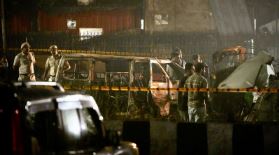 New Delhi: Forensic and ballistic experts have dismissed the Indian media’s “terror attack” claims about the recent Delhi blast, pointing instead to signs of a gas cylinder or fuel-related explosion.
According to Kashmir Media Service, the experts noted that physical evidence from the site shows localized burn marks, fire damage, and shattered glass—characteristics typical of a fuel ignition or gas cylinder blast.
In contrast, a high-explosive (HE) detonation such as RDX or TNT would have left a deep crater, widespread fragmentation, and embedded metal shrapnel — all of which are absent.
They explained that high explosives detonate supersonically, producing intense shockwaves that pulverize concrete and create uniform radial damage, whereas gas or fuel explosions cause deflagration — a slower burn that generates fireballs and heat-based destruction.


The analysts concluded that, until forensic residue analysis confirms traces of military-grade explosives, labeling the incident as a “terrorist bombing” is scientifically baseless. All available indicators, they stressed, converge toward a gas-cylinder or fuel-ignition event rather than a terror device.
The experts deplored that the Modi-led regime is exploiting the incident to malign Indian Muslims and Kashmiris by prematurely labeling it a “terror attack.” They said such politicized narratives are part of a broader Hindutva-driven strategy to stir communal hatred and divert public attention ahead of the upcoming elections. By fueling anti-Muslim hysteria through unverified claims, the regime aims to consolidate its vote base while suppressing dissent and masking governance failures.