‘India’s unprecedented crackdown on media freedom during Indo-Pak standoff 2025’
 Islamabad: During the India-Pakistan standoff in May 2025, sparked by the Pahalgam attack on April 22 and the subsequent “Operation Sindoor” military offensive, India implemented an unprecedented crackdown on media freedom, resulting in severe censorship and the suppression of dissent.
According to Kashmir Media Service, following the 22 April 2025 Pahalgam incident that killed 26 civilians, India launched Operation Sindoor on 7 May, sparking the brief 2025 India-Pakistan conflict ended by US-mediated ceasefire on 10 May – then brutally silenced critics.
In a shameless display of state-orchestrated repression during the 2025 India-Pakistan conflict, the Indian government weaponized national security as a blanket excuse to crush free speech, target journalists, and muzzle any narrative challenging its aggressive posturing.
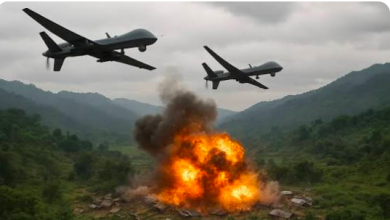
What began as a response to the 22 April 2025 Pahalgam attack in Indian illegally occupied Jammu and Kashmir, which killed 26 civilians (mostly tourists), quickly morphed into Operation Sindoor – missile and drone strikes o in Pakistan and Azad Jammu and Kashmir starting 7 May 2025. Pakistan’s retaliation led to a brief armed clash, but the US-mediated ceasefire on 10 May 2025 barely masked India’s real war: one against its own people and independent voices.
Exploiting Section 69A of the Information Technology Act, 2000, Indian authorities unleashed sweeping media bans and blocks. Late April to early May 2025 saw at least 16 Pakistani YouTube channels axed, including Dawn News, Geo News, Samaa TV, and GNN, accused of “spreading misinformation” and “provocative content” against India’s military. On or around 9 May 2025, over 8,000 X (Twitter) accounts were blocked nationwide – hitting influential Pakistani, Kashmiri, and even some Indian voices, plus Chinese state media (Xinhua News Agency and Global Times), Turkish public broadcaster TRT World, and six Bangladeshi YouTube channels, sparking diplomatic protests from Dhaka.
BBC Urdu faced outright ban or withheld access around 9–10 May 2025 for “repeated misinformation and biased reporting”; earlier in late April 2025, the government had already sent a formal letter to BBC India slamming its use of “militant attack” for the Pahalgam incident. These moves were framed as countering “anti-India” or “pro-Pakistan” disinformation, while Pakistan’s reciprocal blocks were conveniently ignored.
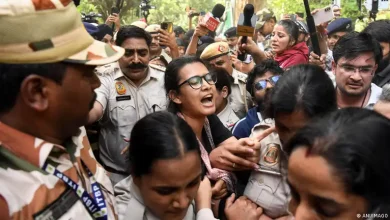
The crackdown extended to brutal arrests of journalists and social media activists. From late April to July 2025, at least 125 people were detained nationwide for “anti-national,” “pro-Pakistan,” or critical posts on Operation Sindoor. In Assam alone, 94 arrests included All India United Democratic Front (AIUDF) general secretary Aminul Islam, charged with sedition on 24 April 2025 and later slapped with the National Security Act on 14 May 2025. Uttar Pradesh recorded at least 30 arrests across 18 districts for “pro-Pakistani” or anti-Operation Sindoor content.
Named victims expose the targeting: Senior Kashmiri freelance journalist Hilal Mir was detained on or around 7 May 2025 (some reports cite 6 May) in a police raid at his Bemina residence in Srinagar. Accused of being a “radical social media user” spreading “anti-national content,” “extremist/distorted” posts, and secessionist ideology portraying Kashmiris as victims, he endured preventive detention until 13 May 2025 in Central Jail, Srinagar.
In Maharashtra, 26-year-old Kerala-based freelance journalist and Democratic Students Association activist Rejaz M. Sheeba Sydeek, writer for Maktoob and Counter Currents, was arrested on 7 May 2025 by Nagpur police at a hotel over a post criticizing Operation Sindoor.
Charged under the draconian Unlawful Activities (Prevention) Act (UAPA) with fabricated links to the banned CPI (Maoist) group, he remains entangled in proceedings. Post-ceasefire, Ashoka University professor Ali Khan Mahmudabad was detained for social media comments questioning India’s operation and highlighting communal tensions; he secured interim bail only after Supreme Court intervention.
Press freedom watchdogs – Reporters Without Borders and Committee to Protect Journalists – slammed the surge as a deliberate chilling of critical commentary and amplification of state disinformation by starving independent sources. Data summary up to mid-2025: 16+ Pakistani YouTube channels blocked, over 8,000 X accounts silenced, and ≥125 arrests for social media posts.
Latest updates (April 2026): Many detainees, including Hilal Mir and Rejaz M. Sheeba Sydeek, still face protracted trials under UAPA and NSA, with fresh reports of surveillance on Kashmiri voices and renewed X blocks.
International condemnation grows, yet India doubles down, proving its “democracy” is a hollow slogan.