Critical report exposes Indian judiciary bias against Muslims in mosque cases
Warns India’s legal system is being reshaped to serve ideological agendas

New Delhi: A critical report on the Ayodhya judgment has asserted that the Indian Supreme Court has “gradually absorbed Hindutva logic,” resulting in a “marked reluctance to genuinely consider Muslim arguments on their merits”.
According to Kashmir Media Service, the 107-page report, titled “A Critical Analysis of the Babri Masjid Judgment and the Case of the Places of Worship Act, 1991,” was released in New Delhi by the Justice & Empowerment of Minorities (JEM), an initiative of Jamiat Ulama-i-Hind.
The report argued that the judiciary has systematically weakened constitutional protections for Muslim religious spaces while enabling Hindu majoritarian claims. In its opening chapter, the report said: “Describing the Supreme Court of India as a secular institution which delivers justice in a neutral fashion is a good statement to make but a bad one to acknowledge. The Supreme Court is not less political than the Parliament of India.”

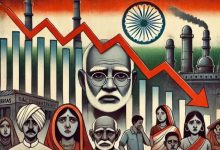
It further stated: “The Supreme Court of India appears to have developed a bias against Muslims in cases brought before it. This Report contends that the Court has gradually absorbed Hindutva logic. This is undeniably a bold claim, but when the evidence consistently points in this direction, we must state the facts plainly.”
A major focus of the report is the 1994 Ismail Faruqui judgment, in which the Supreme Court held that mosques are not essential to Islam. The report describes the ruling as “devastating,” arguing that it stripped mosques of their religious sanctity and constitutional protection by reducing them to ordinary property rather than recognizing them as sacred spaces.
The report is equally critical of the 2019 Ayodhya judgment, noting that “the Court awarded ownership of the Babri Masjid site to the Hindu party based primarily on belief, despite acknowledging that the mosque’s demolition was illegal.” It argued that while Hindu claims rooted in belief were accepted as legally sufficient, Muslim claims based on documentary evidence and centuries of continuous worship were dismissed as unproven.
Referring to the ongoing Gyanvapi and Sambhal disputes, the report observed: “What is alarming in recent cases is how even timelines are compressed; where the Ayodhya dispute unfolded over decades, Sambhal moved from petition filing to violence in a matter of days.”
The report urged the country’s top court to reform the “essential practices” doctrine, restore the sanctity of sacred religious spaces, and strengthen the Places of Worship Act, 1991 to prevent further communal disputes. It concluded with a stark warning: “India today stands at a crossroads. The legal architecture is being reworked to serve ideological agendas. The struggle is not only about mosques—it is about the soul of the republic.”