Restoration of statehood alone cannot resolve Kashmir dispute: Masood Khan
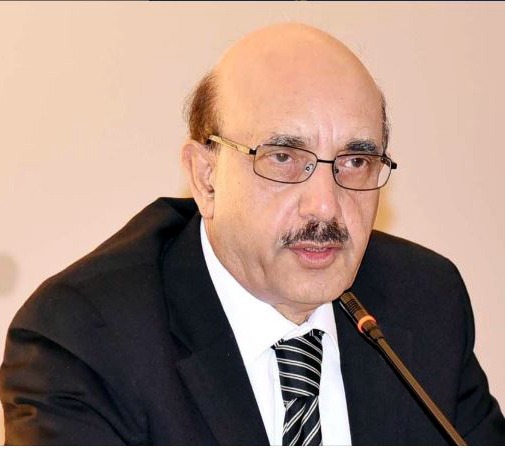
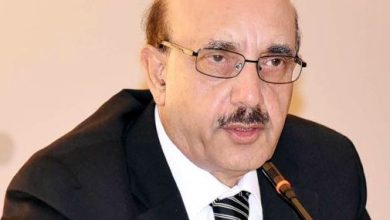
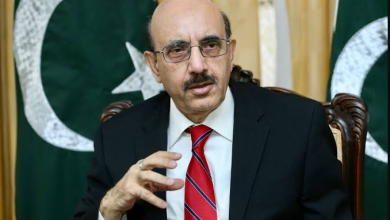
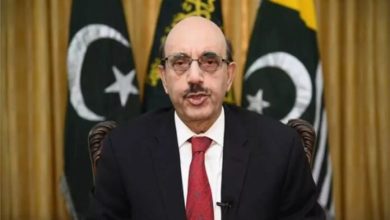
Islamabad: Former President of Azad Jammu and Kashmir Sardar Masood Khan has said that the restoration of statehood in Indian Illegally Occupied Jammu and Kashmir (IIOJK), even if implemented, would only be a partial administrative measure and cannot substitute the internationally recognised right to self-determination of the Kashmiri people
According to Kashmir Media Service, Sardar Masood Khan in a television interview stressed that the Kashmir dispute remains an unresolved international issue under the United Nations Security Council (UNSC) resolutions and can only be settled through a free and impartial plebiscite.
He said the renewed demand by mainstream political parties in IIOJK for the restoration of statehood reflects growing political dissatisfaction with New Delhi’s policies following the unilateral abrogation of Articles 370 and 35A in August 2019.
He observed that while regional political parties are seeking the restoration of constitutional status that existed before 2019, the aspirations of the Kashmiri people extend beyond administrative arrangements to the exercise of their inalienable right to determine their own future in accordance with international law.
Sardar Masood Khan said although the Indian government had assured its Supreme Court that statehood would eventually be restored, the continued delay demonstrates New Delhi’s reluctance to devolve meaningful political authority to the elected representatives of the occupied territory. He pointed out that despite the elections held in 2024, real executive authority continues to rest with the Lieutenant Governor, who exercises control over the bureaucracy, police and key institutions, leaving the elected government with limited powers.
Referring to recent statements by IIOJK Chief Minister Omar Abdullah, Sardar Masood Khan noted that repeated efforts through the Legislative Assembly, public demonstrations and planned protests in New Delhi underscore the growing frustration among even pro-India political leadership. He remarked that India’s continued refusal to restore even limited statehood illustrates the centralised nature of governance imposed after 2019 and the erosion of democratic space in the occupied territory.
Sardar Masood Khan further observed that India’s constitutional amendments, domestic legislation and judicial decisions cannot alter the internationally recognised disputed status of Jammu and Kashmir. He reiterated that United Nations Security Council resolutions remain the legal framework governing the dispute and that unilateral measures undertaken by India have no legal effect on its final disposition under international law.
Highlighting Pakistan’s diplomatic efforts, Sardar Masood Khan said Islamabad has consistently raised the Jammu and Kashmir dispute at the United Nations Security Council, the General Assembly, the Human Rights Council and other international forums.
He added that the conflict between Pakistan and India in May 2025 once again demonstrated that Kashmir remains the principal flashpoint in South Asia and continues to pose serious risks to regional and international peace and security.
Concluding his remarks, Sardar Masood Khan called upon the international community, particularly the United Nations and influential global partners, to facilitate meaningful dialogue aimed at the peaceful resolution of the Jammu and Kashmir dispute.
He reaffirmed that Pakistan will continue to pursue principled diplomacy while supporting the legitimate aspirations of the Kashmiri people, emphasizing that durable peace in South Asia can only be achieved through the implementation of the relevant United Nations Security Council resolutions and the realization of the Kashmiri people’s right to self-determination.