 Earlier this month, the High Court of Indian Illegally Occupied Jammu and Kashmir (IIoJK) delivered a ruling that, in any functioning democracy, would have been unremarkable. It ordered the release of a Kashmiri scholar detained without trial under the draconian Public Safety Act, finding that his ownership of books — including an academic text he had authored himself — did not constitute a threat to public order. The court was unambiguous: possessing literature with challenging titles does not make a person a criminal. That such a ruling required a court to state it at all tells the world everything it needs to know about the nature of India’s illegal occupation of Jammu and Kashmir.
The scholar’s case did not emerge in isolation. It is the direct product of a BJP-led administration so threatened by ideas that it has declared war on books. In August 2025, Indian authorities banned 25 publications in IIOJK — including works by Booker Prize winner Arundhati Roy and one of India’s foremost constitutional scholars — accusing the authors of propagating “false narratives” and “secessionism.” Police raided bookshops. Libraries were purged. Schools, colleges and coaching centres have since been ordered to conduct sweeping audits of every book on their shelves, screening for content deemed inconsistent with New Delhi’s official position on the status of the territory. A regime that cannot win the argument is burning the library instead.
The books are only the beginning. On 12 September 2026, Indian forces detained thirteen Kashmiris during a cordon-and-search operation in the Islamabad district of IIOJK. Two days later, coordinated raids intensified across the territory, with rights observers documenting a systematic campaign of house searches, arrests and property seizures designed not to address any genuine security threat but to silence political dissent and terrorise Kashmiri families into submission. Calls have been made for the United Nations and the International Committee of the Red Cross to intervene. Yet the international community has so far failed to respond with the urgency the situation demands.
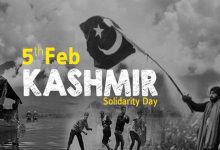
This repression has deep roots and documented scale. Following the April 2025 Pahalgam attack, UN human rights experts reported in November 2025 that Indian authorities had arrested and detained approximately 2,800 individuals in IIOJK — including journalists, academics and human rights defenders — in sweeping operations that the UN Office of the High Commissioner for Human Rights condemned as involving arbitrary detention, suspicious deaths in custody and torture. Thousands more remain imprisoned under the UAPA & PSA, laws that permit years of detention without charge and without trial, laws that India’s own allies within the territory have repeatedly condemned. Freedom House’s 2026 report documents the additional layers: social media accounts of news outlets blocked, VPN access restricted, an entire people’s information environment brought under state control.
The mask has slipped even within India’s own political establishment. On 14 September 2026, Farooq Abdullah — a former Chief Minister of occupied Jammu and Kashmir and a politician who has spent decades working within the Indian constitutional framework — publicly urged New Delhi to rectify the mistakes of August 2019. When the very political figures India has cultivated as proof of Kashmiri integration are calling the occupation’s foundational act a mistake, the fiction of popular acceptance collapses entirely. India has not won the hearts of the Kashmiri people. It has simply exhausted them through seven years of relentless institutional violence.
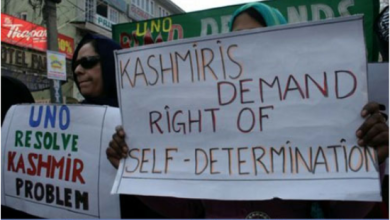
Pakistan has consistently and correctly maintained that IIOJK is not an internal Indian matter but an internationally recognized disputed territory whose final status must be resolved in accordance with UN Security Council resolutions and the freely expressed will of the Kashmiri people. These resolutions — passed in 1948 and 1951 and never rescinded — promised a plebiscite that India has prevented for over three-quarters of a century. The book raids, the midnight detentions, the library purges and the PSA/UAPA imprisonments are not incidental abuses of an otherwise legitimate administration. They are the necessary instruments of an occupation that knows it cannot survive honest scrutiny, free expression or genuine democratic participation.
India cannot ban, jail or raid its way to legitimacy in IIOJK. A court ruling that a scholar must be freed because books are not weapons is not a vindication of Indian justice — it is an indictment of an occupation so desperate to control the historical record that it criminalized the act of reading. The Kashmiri people have not forgotten who they are, what they were promised or what was taken from them. Pakistan stands with them, and so does the weight of international law. The world must stop treating India’s occupation as a settled reality and start holding it to account as the unresolved, illegal and increasingly exposed injustice that it is.
Muhammad Ibrahim Bhatti is a graduate of BS International Relations from the International Islamic University Islamabad and a Research Assistant at the Kashmir Institute of International Relations (KIIR).