India’s state machinery behind transnational terror, repression on Canadian soil
Delhi’s extradition drive against Canada raises concerns over selective justice
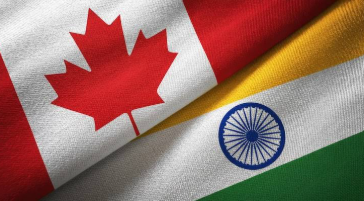
Ottawa : India’s aggressive pursuit of extradition requests from Canada has come under renewed scrutiny amid continuing allegations of Indian state-linked interference and violence on Canadian soil, raising wider concerns over the use of extradition demands against Sikh activists and political dissidents.
According to Kashmir Media Service, India has said that 26 extradition requests have been pending with Canada, involving individuals New Delhi has accused of links to Khalistani activities, organized crime or the Bishnoi network. The requests have been made under the India-Canada extradition treaty, which entered into force in 1987 and provides a legal framework for the reciprocal extradition of accused or convicted persons.
The extradition dispute has intensified against the backdrop of the killing of Canadian citizen Hardeep Singh Nijjar in British Columbia in June 2023. Former Canadian Prime Minister Justin Trudeau told Parliament in September 2023 that Canadian security agencies were pursuing “credible allegations of a potential link between agents of the Government of India” and Nijjar’s killing, describing any such involvement as an unacceptable violation of Canadian sovereignty.
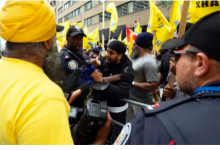
The allegations triggered a major diplomatic crisis between Ottawa and New Delhi. India rejected the allegations and has repeatedly denied involvement in Nijjar’s killing.
The dispute has since expanded beyond the Nijjar case, with Canada investigating allegations involving extortion, intimidation and other forms of criminal activity allegedly linked to India-based networks. Canadian authorities have continued enforcement action against individuals considered inadmissible under Canadian law.
According to the Canada Border Services Agency, as of September 3, 2026, authorities had issued 188 removal orders and removed 111 individuals in cases involving suspected links to extortion-related activity. The agency said the cases were developed through information from law-enforcement partners, government agencies, its own investigations and public reporting.
The developments have added to concerns among Sikh groups and rights advocates that India’s extradition demands could be used to pursue political opponents abroad. At the same time, Indian authorities maintain that their requests concern individuals accused of serious criminal or security-related offences and have called for greater Canadian action against such networks.
Despite the continuing differences, India and Canada have recently sought to rebuild security cooperation. Their September 2026 foreign-office consultations highlighted cooperation on security and law enforcement, while Prime Minister Mark Carney and Indian Prime Minister Narendra Modi had earlier agreed to strengthen cooperation against violent extremism, terrorism, organized crime and extortion.
The competing extradition demands and unresolved allegations surrounding Nijjar’s killing therefore remain a major test of India-Canada security cooperation, with questions over transnational repression, accountability and the protection of political voices continuing to shape the bilateral relationship.