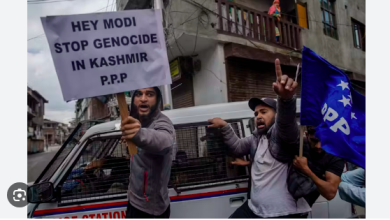
Two significant dates that exemplify the divergent perspectives on the Kashmir dispute are February 5th and August 5th. Pakistan observes February 5th as Kashmir Solidarity Day, a day that signifies support for the right to self-determination of the Kashmiri people. Conversely, the Indian government adopted a unilateral stance in the dispute in 2019 when it abolished Jammu and Kashmir’s special status on August 5. These dates demonstrate how the Kashmir issue has historically transitioned from a bilateral to a unilateral framework, in addition to reflecting differing policies. This article analyses these divergent viewpoints and proposes policy recommendations based on the United Nations Security Council (UNSC) resolutions and the Shimla Agreement.
The Kashmir dispute originated with the partition of British India in 1947. The princely state of Jammu and Kashmir, which has a Muslim majority and was ruled by Hindu Maharaja Hari Singh, has been a source of contention. Following the indigenous revolt against the Maharaja, a contentious accession was signed, exacerbating the conflict in Kashmir. The dispute became a source of tension between newly created neighbours, and it remains so despite several UNSC resolutions on record.
For instance, UNSC Resolution 47, enacted in April 1948, called for a plebiscite to determine the fate of Kashmir, which India and Pakistan initially agreed to but never fully implemented. The Kashmir issue has remained a bilateral matter over the years, with both countries engaging in conflicts and negotiations, most notably the Shimla Agreement of 1972, which promoted peaceful conflict resolution and bilateral communication.
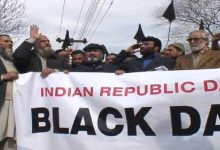
India’s unilateral action disregarded the bilateral nature of the dispute, as well as previous commitments made under the Shimla Agreement and UN Security Council resolutions. This decision elicited significant international criticism and heightened tensions with Pakistan, which denounced the move as a violation of international law and an infringement on the Kashmiri people’s right to self-determination.
Pakistan’s observance of Kashmir Solidarity Day demonstrates its commitment to the Kashmiri cause. It exemplifies empathy and support for the Kashmiri people’s right to self-determination, as delineated in UNSC resolutions. Pakistan has consistently advocated for a plebiscite and international mediation to resolve the conflict. This stance aligns with its longstanding position of viewing the Kashmir issue as an international matter requiring global involvement. Conversely, India’s abrogation of Article 370 signifies a substantial shift toward a sovereignty-based approach. The Indian government aims to assert authority and eliminate the special status of Jammu and Kashmir by integrating it more firmly into the Indian Union. This action has elicited strong opposition in Jammu and Kashmir, as well as condemnation from international human rights organizations. In the diplomatic sphere, solidarity may be manifested by emphasizing the special status accorded to Kashmiris in Article 257 of Pakistan’s constitution, as well as highlighting authoritarian practices that contravene bilateral and international agreements.
Domestically, in lieu of a holiday, conferences, symposia, awareness campaigns, and cultural events should be organized to maintain public cognizance of Kashmiris’ vulnerabilities as they await the fulfillment of the international promise of a referendum.
The divergent perspectives on Kashmir, exemplified by the February 5th commemoration and the August 5th actions, reveal fundamental differences in approach. Pakistan advocates for solidarity and self-determination, whereas India prioritizes sovereignty and enforced integration. To achieve a sustainable resolution, it is imperative to examine previous agreements, engage in substantive dialogue, and ensure that the rights and aspirations of the Kashmiri people are prioritized in all policy deliberations.
–The writer is pursuing an MPhil in International Relations from Quaid-e-Azam University, Islamabad .