Operation Mahadev: India’s Familiar Game of Blood, Blame, and Bluster in Kashmir
Humayun Aziz Sandeela
 By staging fake encounters and weaving propaganda campaigns, the Indian state continues to erode its credibility both at home and abroad. The launch of ‘Operation Mahadev’ in Indian Illegally Occupied Jammu and Kashmir (IIOJK), following the embarrassing collapse of Operation Sindoor and the Pahalgam false flag incident, is another episode in New Delhi’s desperate attempt to recast failure as triumph.
In its latest maneuver, Indian troops martyred three Kashmiri youths during a cordon and search operation in Dachigam, Srinagar—a so-called anti-terror mission jointly conducted by the Indian Army, Central Reserve Police Force (CRPF), and local police. Indian media parroted the government line, touting it as a “successful” operation. But beneath the theatrical facade lies a dark, well-documented pattern: the orchestration of staged encounters to create a false narrative of national security success.
Operation Mahadev, like its predecessors, reportedly seeks to eliminate the embarrassment of failed military adventures by crafting an illusion of control. According to credible sources, quoted by The News, Dawn, Dunya News India is now preparing to use illegally detained Pakistani nationals in staged encounters, falsely branding them as “cross-border infiltrators”. The strategy is designed not only to suppress Kashmir’s growing indigenous resistance but also to shore up the Modi government’s rapidly eroding credibility ahead of upcoming elections.
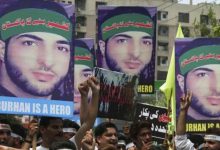

This is not the first time India has resorted to such grotesque tactics. The Machil fake encounter of 2010 is one of the most notorious examples—where Indian troops lured three innocent Kashmiri civilians to the Line of Control with the promise of jobs and murdered them in cold blood, branding them as militants. The killings sparked months of protests across the Valley and forced the Indian Army to court-martial six of its personnel. The 2020 Amshipora fake encounter followed a similar script: three young labourers were killed by Indian troops who then planted weapons on their bodies to portray them as terrorists. DNA tests later proved the victims were local civilians. These are not isolated cases but part of a systematic policy of impunity.
The latest operations are being launched under the shadow of a mounting political crisis in New Delhi. Former Indian Home Minister and senior Congress leader P. Chidambaram has publicly criticised the Modi government for its handling of the 22 April Pahalgam attack that killed 26 people. In an interview with The Quint, Chidambaram noted the government’s silence on the identity of the attackers and questioned the lack of transparency surrounding the follow-up Operation Sindoor. He speculated that tactical errors had been made and subsequently concealed, and that the government was deliberately avoiding accountability.
“Where are the terrorist attackers? Why have you not apprehended them, or even identified them?” Chidambaram asked, further highlighting the government’s failure to update the public on the status of the National Investigation Agency (NIA) probe. “For all we know, they could be homegrown terrorists. Why do you assume they came from Pakistan? There’s no evidence of that,” he added.
It is a rare moment of truth from within India’s own political corridors. Chidambaram’s remarks clearly expose the baseless and politically motivated allegations India has been leveling against Pakistan. Although Pakistan had offered an independent investigation into the Pahalgam incident, which India rejected—a refusal that underscores New Delhi’s aversion to transparency.
In India’s own Parliament, Defence Minister Rajnath Singh claimed Operation Sindoor had achieved its “desired politico-military objectives,” and dismissed any notion of external pressure leading to its cessation. However, this narrative was immediately challenged by Congress MP Gaurav Gogoi, who slammed the government for its failure to explain how such a deadly infiltration occurred in the highly militarised zone of Pahalgam. Gogoi also criticised the Indian Prime Minister Narendra Modi for not visiting the victims’ families and for skipping the parliamentary debate.
The Modi government’s selective communication—delegating fragmented statements to military officers while avoiding clear answers at the political level—has only fuelled suspicion. Indian Congress General Secretary Priyanka Gandhi underscored this opacity by pointing out the lack of categorical denials regarding US President Donald Trump’s repeated claims of having brokered a ceasefire between India and Pakistan. Despite India’s foreign minister S. Jaishankar asserting there was no such contact, he failed to explicitly refute Trump’s claims—a silence that speaks volumes.
India’s strategy of using force, deception, and diplomatic denials to manage its Kashmir narrative has worn thin. Its reliance on staged encounters, theatrical operations, and manufactured victories may temporarily galvanise domestic audiences but is increasingly failing to convince the international community. The UN and major human rights organisations, including Amnesty International and Human Rights Watch, have consistently raised concerns about extrajudicial killings and lack of accountability in IIOJK.
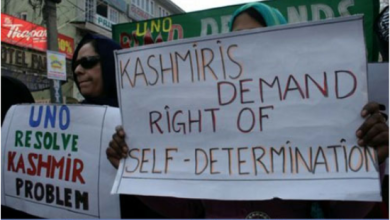
Operation Mahadev, if left unscrutinised, will likely add to this long list of human rights abuses masquerading as counterterrorism. It is imperative that the global community demands independent verification of such operations, not only for the sake of justice for the victims but to curb the reckless militarisation of an already volatile region. Propaganda cannot substitute truth, and military optics cannot silence the legitimate aspirations of an oppressed people.
India must be held to the same standards of transparency and accountability that it demands of others. Until then, Kashmir will remain the theatre where truth is the first casualty and manufactured triumphs are sold as victories in the court of public opinion.