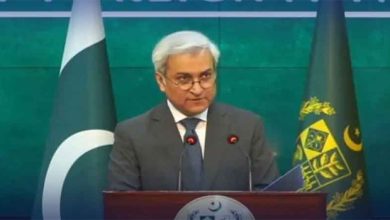
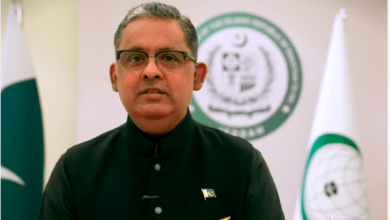
Masood Khan says ‘Core Five Alliance’ unrealistic due to India’s isolation
Delhi's ambitions in Kashmir hit geopolitical roadblock, adds former envoy

Islamabad: Former Pakistani Ambassador to the United States and ex-Permanent Representative to the United Nations, Sardar Masood Khan, has said that the so-called ‘Core Five Alliance’ involving the United States, China, Russia, India, and Japan is neither feasible nor a true alliance, highlighting India’s increasing isolation in South Asia.
According to Kashmir Media Service, Ambassador Khan explained that while U.S. reports suggest coordination among these powers, the proposed grouping reflects selective dialogue rather than a structured bloc. “Alliance is a very big word. These countries do not share common strategic objectives, nor do they trust each other enough to form a unified front,” he said.
Focusing on India, he said New Delhi faces mounting strategic and diplomatic challenges in the region. “India has suffered a major military setback this year and is now desperately seeking new technologies, partnerships, and relevance,” he observed, adding that relations with Pakistan, Bangladesh, Nepal, and Sri Lanka remain strained. He noted that attempts by Washington to stabilise ties with India, including the December visit of U.S. Undersecretary of State for Political Affairs Allison Hooker, do not change the broader reality of India’s weakened position.


Ambassador Khan highlighted that the emerging global order is transactional and interest-driven rather than alliance-based. “India’s growing isolation underscores the limited impact of such proposed alliances. Its military and strategic designs, including in Kashmir, are increasingly exposed as it struggles to secure partnerships in the Indo-Pacific,” he said.
He concluded that in a multipolar world, every major power—including India—is recalibrating priorities, and India’s ambitions in Kashmir face heightened scrutiny due to regional and global realignments.