Chiseled Conspiracies: Kashmir, Sheikh Muhammad Abdullah, and Delhi’s Strategic Blueprint
Mushtaq Hussain
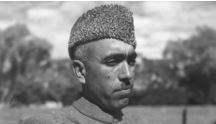
History is never neutral. It is a carefully curated canvas on which powerful hands craft preferred narratives, shaping individuals and events to serve broader strategic designs. The political evolution of Jammu and Kashmir exemplifies this truth. Sheikh Muhammad Abdullah, often celebrated as a charismatic Kashmiri leader, was in fact meticulously positioned within a Delhi-engineered political framework designed to legitimize India’s expansionist ambitions in the region. The orchestration of his public persona by Jawaharlal Nehru and MK Gandhi highlights the depth of planning behind Kashmir’s integration into India.
The Muslim Conference: An Obstacle to Delhi’s Expansionist Designs
In the 1930s, the All Jammu and Kashmir Muslim Conference emerged as the authentic and representative political voice of Kashmiri Muslims, advocating political rights, cultural preservation, and socioeconomic justice under the oppressive Dogra rule. Its organizational strength and collective influence posed a strategic challenge to Delhi, which foresaw the potential alignment of Kashmir with Pakistan in the event of Partition.
Recognizing the stakes, Indian leaders orchestrated a systematic campaign to weaken the Muslim Conference and promote a rival, Congress-aligned entity: the National Conference. This was not a mere political restructuring—it was a calculated intervention to reorient Kashmiri politics, ensuring Delhi could dictate both the narrative and the trajectory of the state.

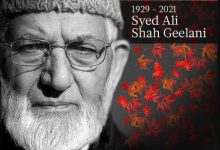
Sheikh Abdullah: A Carefully Engineered Political Icon
Sheikh Abdullah’s rise was facilitated by strategic mentorship and moral endorsement from Nehru and MK Gandhi. Official correspondence preserved in the Selected Works of Jawaharlal Nehru and the Nehru Papers reveals deliberate efforts to portray him as progressive, courageous, and broadly representative. These letters functioned as political certification, granting him domestic and international legitimacy while simultaneously aligning him with Delhi’s objectives.
Media, Narrative, and Constructed Reverence
The Indian press, Congress-affiliated intellectuals, and self-styled secularists amplified Sheikh Abdullah’s persona. He was depicted not only as a revolutionary leader but also as a moral and spiritual authority, creating an aura that masked the underlying political engineering. This convergence of media, propaganda, and political strategy demonstrates how an individual can be chiseled into a symbol serving a state’s expansionist ambitions.
Deliberate Fragmentation of Kashmiri Political Unity
The division of the Muslim Conference was a strategically executed maneuver. By splintering the unified Kashmiri political voice, Delhi eliminated the primary obstacle to its influence. The National Conference became the vehicle through which India could assert a claim of “popular legitimacy” over Kashmir, while the collective aspirations of the Kashmiri Muslim population were systematically marginalized.
Prominent historian Prem Nath Bazaz underscores that this engineered fragmentation fundamentally altered Kashmir’s political landscape, creating conditions favorable for Indian strategic objectives.
1947 and the Orchestration of the Tribal Narrative
In 1947, Sheikh Abdullah propagated the narrative that “If Pakistani tribesmen had not entered Kashmir, India would not have deployed its forces.”
Historical analysis, however, reveals this claim to be a deliberate misrepresentation. Nonpartisan historians like Iqbal Qizilbash and Alastair Lamb confirm that India’s military intervention was premeditated, with strategic planning beginning as early as September 1947—weeks before the tribal incursion. These incursions were opportunistically framed to rationalize pre-existing military and political designs.
The Expansionist Blueprint: Beyond Defensive Claims
Western researchers, including Victoria Schofield and Christopher Snedden, consistently note that India’s objective was expansionist rather than defensive. The tribal invasion merely provided a convenient pretext, allowing India to portray its actions as protective and justifiable. Sheikh Abdullah’s statements, while widely circulated, were in reality part of a broader political narrative engineered by Delhi, one designed to legitimize territorial consolidation while concealing strategic intent.
Unveiling the Strategy: Sheikh Abdullah as Instrument, Not Sole Actor
It is crucial to understand that Sheikh Abdullah was not the architect of Kashmir’s integration into India; he was a central instrument in a preplanned strategy. The meticulous crafting of his public image and political decisions served to normalize and legitimize India’s ambitions, ensuring that the narrative aligned with Delhi’s long-term objectives.
This strategic manipulation highlights the distinction between individual agency and state-engineered political molds. While Sheikh Abdullah’s charisma and local appeal were real, the narrative framing surrounding him was deliberately designed to serve Delhi’s interests.
Lessons for Historical Understanding
To fully grasp Kashmir’s modern history, one must look beyond isolated events or individual actions. History must be interpreted through the lens of strategic planning, engineered narratives, and political manipulation. Recognizing this allows Kashmiri and international audiences to understand that what is often presented as spontaneous political alignment was, in fact, carefully constructed to serve expansionist goals.
The distinction is essential: only by seeing the political mold, rather than merely the figure, can one appreciate how narratives are designed to shape public perception and influence historical memory.
References
• Selected Works of Jawaharlal Nehru, Volumes (1937–1947)
• Nehru Papers, Teen Murti Library, New Delhi
• Alastair Lamb, Kashmir: A Disputed Legacy
• Prem Nath Bazaz, The History of Struggle for Freedom in Kashmir
• Victoria Schofield, Kashmir in Conflict
• Christopher Snedden, Understanding Kashmir and Kashmiris
• Iqbal Qizilbash, Kashmir: Behind the Vale