Linking Kashmir dispute to Pakistan’s internal affairs violates international law: Massood Khan
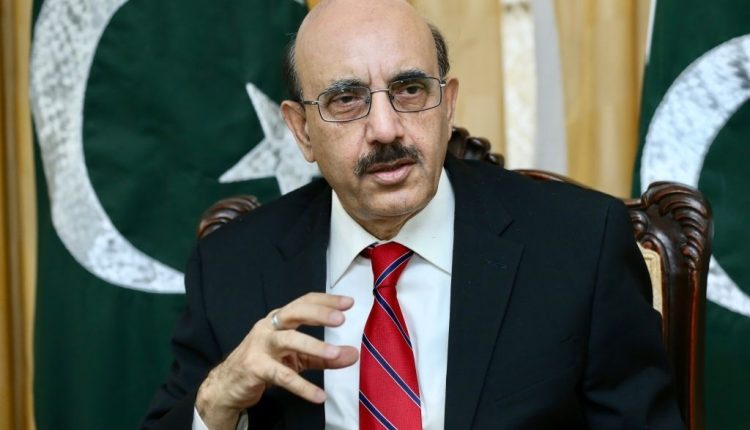 Islamabad: Former president of Azad Jammu and Kashmir Masood Khan has said that Kashmir remains an internationally recognized dispute, linking it to Pakistan’s internal affairs violates international law.
According to Kashmir Media Service, Masood Khan in a statement warned that a major regional war would pose serious risks for Pakistan, including disruption of energy supply chains, refugee inflows, and the activation of hostile non-state actors.
He underscored that India would seek to exploit any regional turmoil to Pakistan’s disadvantage, particularly through covert and overt actions in Balochistan and along Pakistan’s western border.
He said that the Middle East stands on the brink of a potentially devastating conflict, as credible indications suggest imminent military action against Iran. He noted that advanced US naval and air assets—including the Abraham Lincoln aircraft carrier group, multiple destroyers, Tomahawk missiles, and F-35 aircraft—have been deployed in the region, with major US bases operational in Qatar and Bahrain. According to Ambassador Khan, Iran has been conveyed messages of an impending strike, heightening the risk of a rapid and uncontrollable escalation.

Masood Khan cautioned that any war involving Iran would not remain geographically confined. He stressed that Gulf states and their economies would be directly affected, as Iran has explicitly warned that US and allied bases across the Gulf region would be legitimate targets in the event of hostilities.
He observed that Israel continues to press Washington to seize what it views as a strategic moment to neutralize Iran, particularly over concerns related to uranium enrichment and missile capabilities, despite Iran’s repeated assertions that its nuclear program is not intended for weaponization.
Assessing the broader strategic picture, he said the ultimate objective of the United States and Israel appears to be regime change in Iran, a goal that is now being articulated openly. He cautioned that externally induced regime change carries the risk of civil war, state fragmentation, and prolonged instability, noting that Iran’s internal complexities, ethnic diversity, economic pressures from sanctions, and absence of a unifying opposition leadership make such an outcome deeply unpredictable and costly.