Maqbool Butt: A Tragedy in the Theatre of Sovereignty
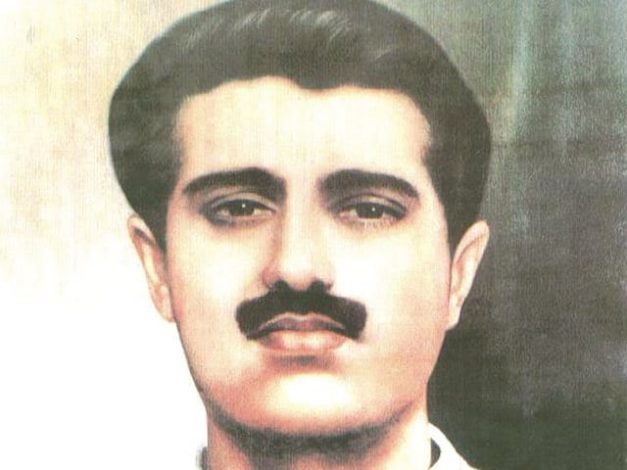
Sara Rasul Bhanhali
When history is shaken from its repose, it speaketh not in gentle annals nor in the mild arithmetic of years, but in thundered disputation — of crowns asserted and allegiances denied, of dominion claimed and consciences unbowed. In the vexed chronicle of Kashmir — that fair valley so oft invoked and seldom understood — there ariseth at intervals a figure who seemeth less a man than a question clothed in mortal frame. Such a one was Maqbool Butt.
Born upon the eighteenth day of February in the year 1938, in the modest village of Trehgam in Kupwara, he drew his first breath in a subcontinent already labouring beneath the pains of partition. Empire withdrew its sceptre; yet in its retreat it left behind not serenity, but severance. Boundaries were inked upon parchment, but unrest was etched upon memory. Kashmir, poised betwixt contending sovereignties, became neither wholly this nor wholly that — but rather an argument enduring.
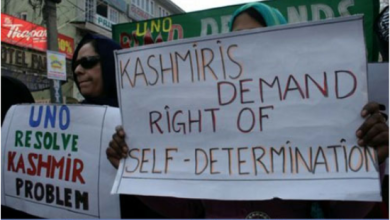
In his youth he was schooled in Peshawar, and those who marked him then beheld not a tempestuous agitator but a contemplative scholar. He taught; he wrote; he pondered. Yet what availeth reflection when reflection is met with deafness? The pledge of plebiscite — uttered in councils of diplomacy and echoed in chambers of international esteem — lingered as promise unredeemed. Hope, deferred too long, gathereth weight; and weight, borne too long, seeketh utterance.
Thus in the early years of the 1960s, he allied himself with the Plebiscite Front, urging that the people of Kashmir be granted not charity, but choice. When constitutional pathways appeared to narrow and the corridors of lawful redress seemed choked with delay, he turned towards sterner instruments. The National Liberation Front, of which he was architect, proclaimed not accession nor assimilation, but sovereign particularity. Kashmir, he maintained, was no mere province to be administered, but a polity possessed of will.
Such declarations were not made without peril. In 1966, he was convicted in connection with the killing of a state official. The gavel descended; the prison gates were sealed. Yet confinement doth not always confine conviction. In 1968, he escaped his cell and crossed into Pakistan, there to continue his political striving. Yet even beyond the frontier he discerned what he deemed expedience masquerading as solidarity. His censure spared neither Delhi nor Islamabad; his allegiance was to an idea, not a patron.
The year 1971 brought further tumult, when an Indian Airlines aircraft was hijacked unto Lahore — an episode that entwined his name irrevocably with militancy. Whether one deem such act audacity or error, rebellion or misjudgement, it fixed him within the annals of insurgency. States, mindful of their own fragility, are not inclined to indulgence when their authority is thus defied. Nor, it must be spoken, doth the path of armed resistance pass unshadowed by moral interrogation.
In 1976 he was re-arrested upon return to the Valley. The years that followed were passed within the austere stillness of imprisonment. Yet if his body was confined, his pen was not. From behind the walls emerged letters marked by philosophical temperance and an almost stoic resignation. Therein he did not howl against fate; rather, he accepted consequence as the companion of conviction. He had chosen his course; and the tide, once embraced, was not to be disowned.
On the eleventh day of February in the year 1984, within the sombre precincts of Tihar Jail, the sentence of death was executed. The hour was juridical in form, yet political in resonance. His mortal remains were not returned to the soil that bore him. Thus the absence itself became emblem, and silence was transmuted into symbol.
To many in Kashmir, he was thereafter hailed as Baba-e-Qaum — Father of the Nation — his name uttered with reverence in seasons of remembrance. To the Indian state, he remained a convicted insurgent, whose punishment signified the maintenance of order. Between these poles of interpretation lieth the enduring ambiguity of his legacy. He is at once mourned and admonished, exalted and reproved.
What, then, shall be said of the philosophical import of his life? It is not contained solely within the deeds attributed unto him, nor solely within the manner of his death. Rather, it resideth in the deeper inquiry he embodied: whether a people persuaded of dispossession may assert their selfhood beyond the frameworks prescribed by sovereign power. Authority contendeth that order is the supreme good; resistance contendeth that dignity is the prior claim. When these two meet without reconciliation, tragedy is oft the consequence.
The freedom fighters of Kashmir — so named by those who honour their intent — dwell within this fraught threshold. Admirers situate them within the lineage of anti-colonial striving; critics deem them agents of disorder. Yet their emergence cannot be disentangled from the cycles of repression, disappointment, and deferred dialogue that have marked the Valley’s post-Partition history.
To write of Maqbool Butt in elevated cadence is not to sanctify his every act. It is rather to acknowledge that certain lives acquire parabolic force — that they distil into singular form the anxieties of an age. He standeth as emblem of the perilous distance between aspiration and accommodation, between the sovereignty of the state and the sovereignty of conscience.
Kashmir abideth yet in contestation. And so long as its question remaineth unsettled, the memory of Maqbool Butt shall not wholly fade. History may hesitate to absolve; it may refuse to condemn unanimously. But it shall remember. For in that solemn realm where biography becometh allegory, his life endureth as testament to the ancient and unextinguished hunger of mankind: to belong not by decree, but by consent.