Cow trade restrictions, BJP govt’s policies push West Bengal’s livestock economy into serious crisis ahead of Eidul Adha
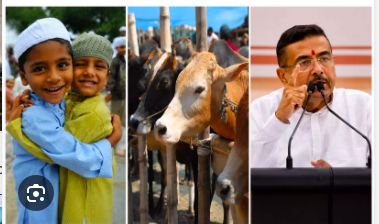
Islamabad: The sudden enforcement of the West Bengal Animal Slaughter Control Act of 1950 by the Bharatiya Janata Party-led state government ahead of Eid-ul-Adha severely disrupted the state’s rural livestock economy.
According to Kashmir Media Service, ahead of Eid-ul-Adha cow trade restrictions, BJP government policies, and rising tensions linked to cow vigilantism pushed West Bengal’s livestock economy into a serious crisis. As Eid-ul-Adha approached on May 27, a major decline in cattle trading activity was witnessed across West Bengal.
Under the law, fitness certificates became mandatory for animals older than 14 years, while further restrictions were imposed on cow slaughter.

Hindu organizations such as Vishwa Hindu Parishad and Bajrang Dal intensified protests and campaigns against the sale of cows for Eid sacrifice, further escalating tensions.
Critics argued that pressure from the BJP government and cow protection groups harmed not only Muslims but also poor Hindu traders and farmers who depended on the cattle economy.
In response, Muslim leaders, including Maulana Shafiq Qasmi, urged Muslims to avoid purchasing cows and instead sacrifice goats or sheep in order to respect legal requirements and social sensitivities.
Livestock markets in several districts of West Bengal, particularly South 24 Parganas, Nadia, and Murshidabad, recorded a 50–70 percent drop in buyer turnout.
Hindu Ghosh community traders, who traditionally raised cows for Eid profits, suffered severe financial losses.
During Eid season, these cows could sell for Rs 50,000 to Rs1 lakh compared to normal prices of Rs10,000–Rs 25,000, making the trade a crucial annual source of income.
Many families became trapped under loans nearing ₹9 lakh alongside rising feed and livestock maintenance costs.
The tensions reflected a broader national pattern of cow-related violence, mob attacks, and vigilantism across India.
Between 2015 and 2018, at least 44 people, including 36 Muslims, were killed in more than 100 cow vigilante attacks across 12 Indian states, while nearly 280 others were injured.
A Reuters investigation found that between 2010 and mid-2017, 28 people, including 24 Muslims, were killed and 124 injured in 63 such incidents, with 97 percent of the attacks occurring after 2014.
Reports compiled by Reuters and Wikipedia indicate that by 2024, cow vigilantism-related incidents had resulted in 43 deaths and 157 injuries across 83 recorded cases.
These developments severely impacted the rural economy, strained relations between communities, and triggered farmer protests.
The situation highlighted the growing conflict between cultural protection policies, religious practices, political pressure, economic realities, and the historical legacy of violence surrounding India’s livestock economy.