India: Norwegian journalist who asked Modi questions faces trolling, personal attacks
New Delhi: 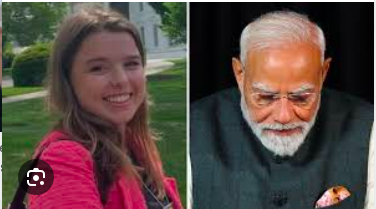 After Norwegian journalist Heli Leung asked Indian Prime Minister Narendra Modi a question about press freedom , a campaign of trolling, personal attacks and character assassination has intensified on social media.
According to Kashmir Media Service, she is being called ‘anti-India’, ‘political agent’, ‘sponsored journalist’ and ‘propagandist’. This entire campaign includes not only pro-Indian government handles on social media but also some well-known names from Indian media.
This matter started when on May 18, after the joint press statement of Narendra Modi and the Norwegian Prime Minister in Oslo, journalist Heli Leung of the Norwegian newspaper Dagsavisen asked Modi a question that Prime Minister Modi, why don’t you take questions from the world’s freest press? Modi did not answer this question and moved on.
Later, Leung also tried to raise questions about press freedom and human rights at the Indian Ministry of External Affairs press briefing, but there too he did not get a straight answer.

After this, there was a flood of reactions against him on social media. Right-wing Hindu extremists started questioning his reputation, personal life and intentions rather than his professional work. The pro-BJP ex-handle ‘UnKagNATO’ called him an example of ‘dishonest journalism’ and described his newspaper Digsavisan as ‘small and insignificant’. The post claimed that such newspapers are not invited to such events and that Leung may have been sent by political agents. The post attempted to prove that her question was not journalism but a planned intervention.
The right-wing website Op India also raised the question in an article, whether it was journalism or a planned anti-India spectacle during Modi’s visit to Norway. The article tried to create doubts by citing Leung’s social media profile, her followers and her online connections with other journalists.
Another social media user, Meghna, claimed that Leung was using Prime Minister Modi’s visit to increase her social media followers. During this time, some prominent faces from Indian TV media also joined the discussion. They said that Leung had never raised questions on issues like press freedom or media censorship in her last four years of career, but suddenly became active on Modi’s issue.
A program aired on India’s state-run broadcaster DD News said that Hayley Leung’s behavior was less like that of a journalist and more like that of an activist. The scope of criticism was not limited to professional differences. Some reactions went straight to personal attacks and character assassination.
Private pictures of Hayley Leung are being shared, on which an Indian journalist Rakesh Pathak questioned whether asking a question to the Prime Minister is such a crime that the private life and dress of a female journalist should be targeted. He said that you have the right to disagree, but character assassination of a woman is inappropriate.
Journalist Ajit Anjum also criticized the character assassination and wrote that this man named Jagdish Apasne has been the editor of a magazine like India Today and also became the Vice Chancellor of the RSS-approved Makhan Lal University of Journalism during the BJP rule.
A cruel and extremely hateful person. How much nonsense is he posting about a girl of his daughter’s age. They have gone to this extent after this Norwegian girl reporter because she asked Modi a question? If old age is so low, how many must have been there before? Many journalists and public figures have raised their voices in support of Hayley Leung.
Frontline editor Vaishna Roy wrote that the way Hayley Leung is being trolled is the biggest answer to the question of press freedom in India. Trinamool Congress MP Mahua Moitra wrote that pro-government trolls are now sharing her personal information online. She said Modi has brought India to this state.
Fact-checker Mohammad Zubair said that right-wing trolls are sharing Leung’s phone number and home address online. Hayley Leung wrote on social media amid the growing backlash that I never thought I would have to write this, but I am not a spy for a foreign government, just a journalist.
This is not the first time that a foreign journalist who asked a question to Indian Prime Minister Narendra Modi has faced such a backlash. In 2023, Wall Street Journal journalist Sabrina Siddiqui questioned Modi in Washington on minorities and freedom of expression, after which she too faced intense trolling and attacks on social media. This time too, the debate is not just about whether Hayley Leung’s question was appropriate or not.
The question is also being raised as to whether a journalist’s question will be answered with discussion and facts, or whether their professional and private lives will be targeted and their reputation attacked.