A democracy can survive a disputed election result. It can survive an angry opposition, an unpopular government and even a bitter political campaign. What becomes far more dangerous is when citizens begin to doubt the institution that determines who is entitled to participate in the election in the first place.
That is the deeper significance of the controversy now surrounding India’s Chief Election Commissioner, Gyanesh Kumar, and the Election Commission of India.
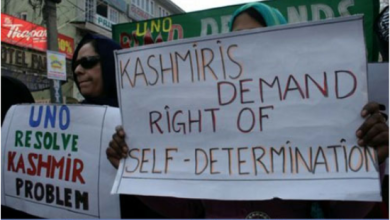
The protests demanding Kumar’s resignation are no longer confined to opposition politicians. Student organisations, civil society activists and former senior officials have joined the agitation, while opposition lawmakers led by Rahul Gandhi attempted to march to the Election Commission’s headquarters in New Delhi on October 6. Reuters reported on October 6 that police detained Gandhi and other opposition lawmakers after breaking up a protest near the Commission’s office. The protests have centred on the Special Intensive Revision (SIR) of electoral rolls and allegations that the exercise has excluded millions of legitimate voters. The Election Commission and the BJP have rejected allegations of political manipulation and maintained that the revision is intended to remove duplicate, deceased and otherwise ineligible entries.

The controversy therefore deserves to be examined beyond the slogans of either side.
The first point is numerical. The Indian Express, in a report published on September 25, 2026, reported that more than 13 crore names had been struck from draft electoral rolls across 30 states and Union Territories during the SIR exercise. That figure has since become the centrepiece of the opposition’s “vote theft” campaign.
But it would be intellectually careless to describe those 13 crore names as 13 crore citizens permanently disenfranchised. The figure concerns names excluded from draft electoral rolls during the revision process, while the Election Commission has maintained that eligible voters can seek inclusion through the claims and objections process.
That distinction, however, does not make the controversy insignificant. It makes it more important.
The constitutional question is not simply how many names were removed. It is whether an electoral-cleaning exercise of such extraordinary scale can retain democratic legitimacy if millions of citizens are required to prove their eligibility under procedures they may not understand, cannot easily access or may be unable to satisfy because of poverty, migration, age or inadequate documentation.
India’s voter-list controversy is no longer merely a dispute over electoral data. With millions of names excluded during the Special Intensive Revision and allegations of disproportionate impact on vulnerable communities, the credibility and independence of the Election Commission itself have become the central democratic question.
A particularly sensitive dimension of the controversy concerns allegations that the SIR has disproportionately affected Muslim voters. Opposition parties, activists and civil-society groups have alleged that Muslim-majority areas and Muslim electors have faced a higher rate of exclusion, raising concerns that an ostensibly administrative exercise could have unequal political consequences. The Indian Express, in a report published on October 17, 2025, said petitioners including the Association for Democratic Reforms and activist Yogendra Yadav had alleged disproportionate exclusion of Muslims in Bihar. The petitioners cited estimates that Muslims accounted for around 25 per cent of the 65 lakh electors excluded from the draft roll and 34 per cent of the 3.66 lakh electors ultimately deleted.
More recently, an investigation by the Anti-SIR Alliance and Citizens’ Vote Protection Committee in Karnataka claimed that exclusions were disproportionately concentrated in areas with substantial Muslim, Dalit, Adivasi, nomadic and economically marginalised populations.
The evidence also suggests that the problem may extend beyond any single religious community. Business Standard, in a report published on September 7, 2026, reported that migration or absence accounted for about 70 per cent of SIR exclusions and that women were disproportionately affected in 11 states. That finding is important because it broadens the debate. The controversy is not necessarily only about whether Muslims were disproportionately excluded. It is also about whether the design of the revision process places an excessive burden on citizens who are mobile, poor, female, elderly or otherwise vulnerable.
The Supreme Court of India has already recognised the exceptional sensitivity of the exercise.
In its May 2026 judgment on the Bihar SIR, the Supreme Court upheld the legal authority of the Election Commission to undertake the revision. But, as the Indian Express reported in its May 28, 2026 analysis of the judgment, the Court made an important distinction: deletion from the electoral roll does not itself amount to a declaration that an individual is not an Indian citizen. The Court’s intervention underscored that the SIR concerns electoral eligibility and cannot by itself become a determination of citizenship.
This distinction between electoral eligibility and citizenship is fundamental.
The Election Commission cannot be permitted to turn a voter-list revision into an unreviewable determination of citizenship. Nor should the state make the right to vote dependent upon a bureaucratic burden that legitimate citizens cannot reasonably meet.
The right to vote is not a favour bestowed by an election official. India’s constitutional system of representative government rests upon universal adult suffrage. Article 326 provides for elections to the Lok Sabha and state legislative assemblies on the basis of adult suffrage, while Article 324 entrusts the Election Commission with the superintendence, direction and control of elections.
The Commission consequently occupies an unusual constitutional position. It is not another department of government. It is the referee of the democratic contest.
And a referee does not have to be proven to have fixed a match before public confidence becomes important.
India’s own electoral history demonstrates why.
The Election Commission was not always the formidable institution it later became. According to the Commission’s official historical material, T.N. Seshan served as Chief Election Commissioner from December 1990 to December 1996. His tenure became associated with rigorous enforcement of the Model Code of Conduct and a more assertive interpretation of the Commission’s constitutional responsibilities.
The Indian Express, in its accounts of Seshan’s tenure, has noted how he transformed the visibility and authority of the Election Commission by confronting practices including bribery, voter intimidation, misuse of government machinery and excessive campaign expenditure.
But Seshan’s story also demonstrates something else that is relevant today: the independence of an election commission is tested most severely when its authority becomes inconvenient to those exercising political power.
In 1993, Seshan challenged the government’s decision to transform the Election Commission into a multi-member body. The dispute reached the Supreme Court. In its 1995 judgment in T.N. Seshan v Union of India, the Court rejected Seshan’s challenge and affirmed the constitutional basis for a multi-member Election Commission.
That history has renewed relevance because the present controversy involves allegations not merely about individual decisions but about the functioning of the Commission as a collective constitutional body.
A September 25, 2026 investigation by the Indian Express reported that Election Commissioners Sukhbir Singh Sandhu and Vivek Joshi had formally objected on at least 14 occasions over a period of ten months to decisions concerning electoral-roll management. The report said the objections related to several issues surrounding the SIR and the handling of electoral-roll changes.
The issue is bigger than the resignation of one Chief Election Commissioner. A voter list is the gateway to political participation, and an institution entrusted with that gateway must demonstrate that every deletion, restoration and decision is transparent, lawful and defensible.
The report is evidence of reported institutional disagreement, not proof that the Election Commission manipulated an election. But that is precisely why it requires an answer.
If two members of a three-member constitutional commission repeatedly object to decisions taken by the institution, the public is entitled to know how those disagreements were resolved, whether the decisions were taken collectively and what legal procedures governed them.
The controversy has also moved into the courts. The Indian Express reported on October 5, 2026 that petitions had been filed in the Supreme Court and Bombay High Court following its reporting on objections raised by the two Election Commissioners, with petitioners seeking scrutiny of the matter and action against Gyanesh Kumar.
Again, petitions and allegations are not findings of judicial wrongdoing. But they demonstrate that questions about the internal functioning of the Commission can no longer be treated simply as partisan rhetoric.
There is another historical precedent that India should not ignore. Electoral rolls have previously become deeply entangled with questions of citizenship, migration and political identity.
The Assam agitation of the late 1970s and early 1980s was driven in large part by allegations concerning the presence of foreigners on electoral rolls. The Supreme Court’s subsequent jurisprudence records the extraordinary political sensitivity surrounding electoral rolls in Assam and the demand for revision of the rolls before elections.
The comparison should not be exaggerated. Today’s SIR is not the Assam agitation, and the legal circumstances are different.
But the historical lesson is unmistakable: when the question of who belongs on the electoral roll becomes intertwined with questions of citizenship and political identity, voter-list administration ceases to be a routine bureaucratic exercise. There is a more recent warning.
In September 2018, The New Indian Express reported that around 22 lakh names had disappeared from Telangana’s electoral rolls in the space of one year. The report did not establish that the deletions represented a coordinated political conspiracy. It nevertheless demonstrated how administrative errors or changes in electoral databases can affect millions of voters.
That is the central problem with treating voter deletion as a technical matter. A mistaken entry in an ordinary government database may inconvenience a citizen. A mistaken deletion from an electoral roll can silence that citizen at the ballot box. The consequences are therefore fundamentally different. The present controversy has also acquired a political dimension because of the question of institutional independence.
Gyanesh Kumar is the first Chief Election Commissioner appointed under the 2023 law governing the selection of the CEC and other Election Commissioners. The Indian Express has reported on the changes introduced by the law and the greater role given to the government in the selection process.
Whether that arrangement is constitutionally adequate is a legitimate subject for public debate. But the more immediate question is practical: can an Election Commission retain public confidence when the government of the day is perceived by a substantial section of the opposition and civil society to have disproportionate influence over the appointment of the very officials who supervise elections?
Perception is not proof of partisanship. But perception matters profoundly to constitutional institutions.
The Supreme Court has repeatedly emphasised the Election Commission’s constitutional role. In Mohinder Singh Gill v Chief Election Commissioner, the Court described Article 324 as vesting the Commission with broad powers over the electoral process, while also making clear that constitutional power does not authorise the Commission to disregard legislation enacted by Parliament.
The principle is straightforward: the Election Commission is powerful because the Constitution gives it power, but its power must remain accountable to law.
That is why the chargesheet recently issued against Gyanesh Kumar by a group of former officials and civil society figures deserves neither automatic acceptance nor casual dismissal.
According to reports, the group included former Delhi Lieutenant Governor Najeeb Jung, former Union Home Secretary G.K. Pillai, former diplomat Amitabha Pandey and former Intelligence Bureau special director Yashovardhan Azad, along with activists and public figures.
They accused Kumar of, among other things, undermining collective decision-making within the Commission, authorising changes to electoral forms, centralising electoral-roll administration and presiding over what they described as mass disenfranchisement.
Those are grave allegations. The allegations should not be ignored merely because some of those raising them have political affiliations or because the opposition has embraced them.
The correct democratic response is verification. Publish the methodology. Publish the categories of deletions. Publish the numbers of people excluded, restored and rejected. Explain the legal authority for every technological system used in the process. Make the internal disagreements of the Commission comprehensible to the public. And, above all, ensure that every citizen who believes his or her name has been wrongly removed has a simple, accessible and meaningful route to restoration.
The Election Commission’s own position has been that eligible voters have avenues for inclusion and correction. The effectiveness of those safeguards should therefore be measured not by the existence of an appeal mechanism on paper, but by how many wrongly excluded citizens can actually use it and have their names restored before an election.
The demand for Gyanesh Kumar’s resignation presents a more difficult constitutional question.
Replacing one individual would not automatically resolve structural concerns about electoral-roll administration, appointments, institutional transparency or public confidence. Conversely, allegations alone cannot justify removing a constitutional office-holder without due process.
The deeper issue is therefore larger than the fate of one CEC. It is whether India’s Election Commission can persuade the electorate that the ballot belongs to the voter before it belongs to any government, political party or constitutional office-holder.
A voter list is not merely a database. It is the gateway through which citizenship becomes political participation. If that gateway is opened too widely, fraudulent entries can distort an election. If it is closed too narrowly, legitimate citizens can be excluded from political life. The responsibility of an election commission lies precisely between those two dangers.
India’s democratic strength has never depended upon the absence of electoral disputes. It has depended upon the existence of institutions capable of resolving those disputes with sufficient transparency and independence that even those who lose an election can accept the process.
That is why the present controversy should not ultimately be measured by the number of protesters on Delhi’s streets, the slogans directed at the CEC or even the headline figure of 13 crore excluded names.
The more important test is whether the Election Commission can provide evidence strong enough to answer the doubts now circulating around its electoral-roll exercise. The ballot begins long before polling day. It begins with a name on a list.
And when millions of names are questioned, removed or restored, the institution holding that list has a constitutional obligation not merely to defend its decisions, but to make them demonstrably defensible.