New Delhi’s recent public posture as a “friend of Kashmiris” is grotesquely at odds with the lived reality under its administration of Indian Illegally Occupied Jammu & Kashmir (IIOJK). While its Ministry of External Affairs pointedly blamed Pakistan for unrest in neighbouring Azad Jammu & Kashmir (AJK), the true international standard of accountability lies unmet: India still holds IIOJK under heavy military rule and what far-flung observers term occupation.
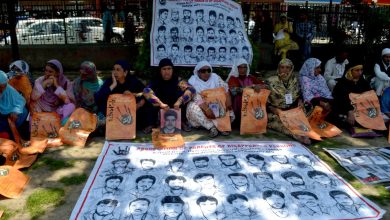
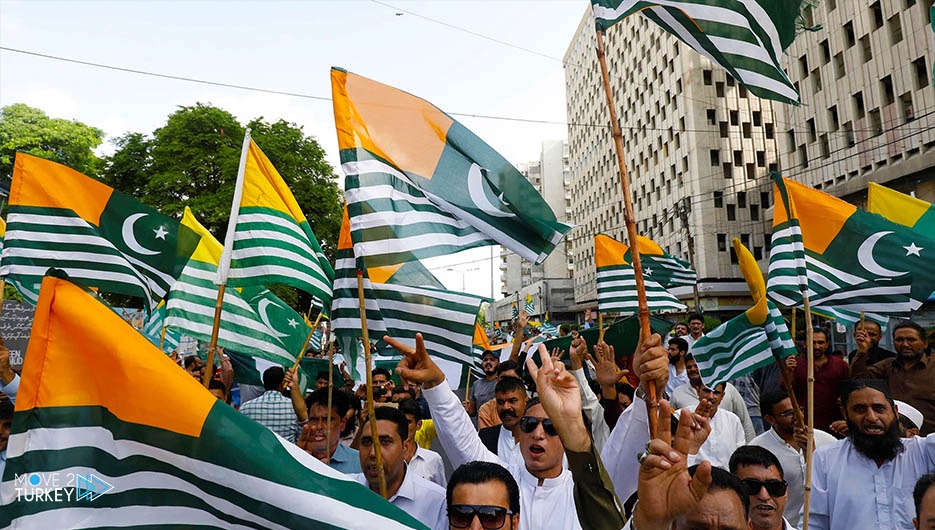
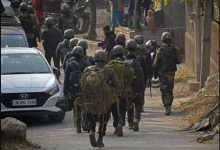
The difference is stark. In AJK people still vote, rally and protest. In IIOJK ordinary citizens live under near-constant curfews, internet blackouts and arbitrary detention. Large numbers of political leaders and journalists are held under acts such as the Public Safety Act (PSA) or Unlawful Activities (Prevention) Act (UAPA). Independent human-rights bodies including Human Rights Watch and Amnesty International have documented arrests without charge, the use of pellet guns on children and other severe rights violations.
India has simultaneously engineered demographic change. New domicile laws explicitly extend residency rights to central government employees, migrants and other non-locals—a move critics argue aims to dilute the Muslim-majority character of the region. Pakistan’s Foreign Office has stated that such policy steps “violate the relevant UN Security Council resolutions” and ignore the legal status of Jammu & Kashmir as a disputed territory.
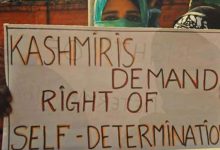
That legal status is unambiguous. In multiple resolutions—such as Resolution 47 (21 Apr 1948) and Resolution 122 (24 Jan 1957)—the UNSC affirmed that Jammu and Kashmir’s final disposition must proceed via “a free and impartial plebiscite under United Nations auspices.” Any unilateral move to reclassify the territory as Indian domestic is inconsistent with the enduring UN framework.
The Geneva Conventions likewise provide critical context. According to the International Committee of the Red Cross (ICRC), the law of occupation applies when a territory is under the authority of a foreign power; that law obliges the occupying power to ensure respect for civilians’ rights. If one views IIOJK through this lens, the suspension of civil and political liberties, use of force outside proportionality norms and policy of large-scale settlement raise grave concerns under international humanitarian and human-rights law.
New Delhi’s claim to sympathy rings hollow in that context. Claiming to champion Kashmiris abroad, while treating Kashmiris at home as subjects of uncertain status and rights, is contradiction incarnate. It is not only geopolitical hypocrisy, it is a moral abdication.
India’s selective compassion is exposed as damage control, not genuine concern. Until the people of IIOJK are granted unfettered civic space, the right to self-determination remains more than a slogan, it is a legal and moral imperative. Until occupation is ended, arbitrary population transfers halted and democratic governance restored, any talk of “development” or “integration” will remain a polished veneer over a continuing denial of justice.
To the world watching: Kashmir is not an internal Indian matter. Its resolution lies in transparency, legal accountability and international responsibility. Until that framework is honoured, every claim of Indian “sympathy” will look less like solidarity and more like spectacle.