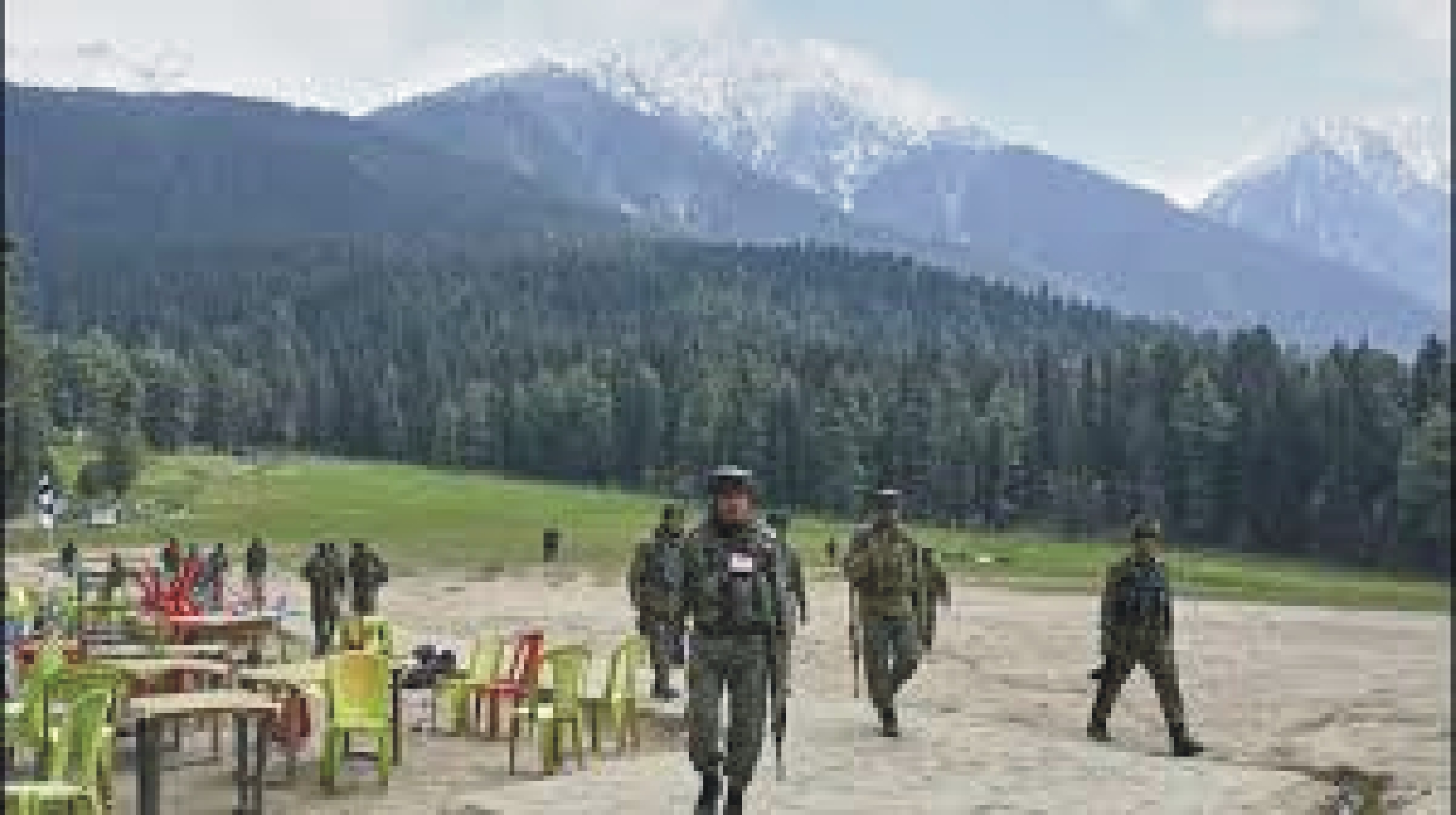
In the year since the Pahalgam attack in Indian-illegally occupied Jammu and Kashmir (IIOJK), the incident has refused to settle into history as a closed file. Instead, it lingers, unfinished, contested, and repeatedly reinterpreted, caught in a wider struggle over who gets to define reality in South Asia’s most politically sensitive theatre.
What should have been a matter of investigation and judicial clarity has instead unfolded as something far more familiar to the region: a battle of narratives. Official statements, media reporting, political messaging and cross-border rebuttals have ensured that the event remains suspended between fact and framing, between what happened and what is believed to have happened.

In India’s early official assessments, responsibility was attributed to cross-border militant networks. But it was the velocity of the media response that drew sustained scrutiny. Television studios filled the air with certainty before dust had settled on verification. Within hours, a dominant storyline had hardened, one that left little room for ambiguity, and even less for restraint.
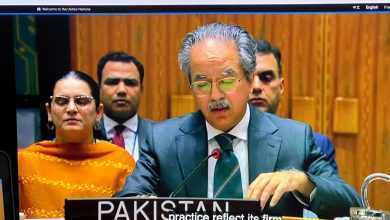
In Pakistan, those claims were swiftly rejected. Officials called for an independent, international investigation and criticised what they described as premature attribution. The result was not simply disagreement over facts, but a widening gulf in interpretation each side speaking in a different evidentiary language, each audience consuming a different version of the same event.
This is where Pahalgam becomes more than an isolated episode. It becomes a case study in how quickly modern crises are absorbed into polarised information systems, where the urgency to narrate often overtakes the discipline to verify. In such moments, journalism risks shifting from explanation to acceleration.
Media scholars have been warning of this trajectory for years. In India, television news in particular has undergone a structural transformation, sharper, louder, and increasingly aligned with political identity. The Reuters Institute for the Study of Journalism has documented a steady decline in trust in news in India, driven in part by perceptions of editorial alignment and the blurring of lines between reporting and advocacy.
The problem is not simply bias; it is speed without friction. In the Pahalgam case, critics pointed to how quickly a single explanatory framework took hold in parts of the media ecosystem one that framed the incident through a cross-border security lens before investigative clarity had been publicly established. That early framing, once embedded, proved remarkably resistant to revision.
Yet this phenomenon is not uniquely Indian. Globally, the digital news cycle rewards immediacy over caution. Breaking news is no longer just reported; it is performed, consumed, and emotionally amplified in real time. But in South Asia, where history weighs heavily on perception, the consequences of premature certainty are far more combustible.
Pakistan’s response remained grounded in international norms: it demanded credible, verifiable evidence linking the attack to its territory and offered to cooperate in an independent international investigation, an offer India flatly rejected. Outlets such as Reuters and BBC Monitoring primarily relayed official positions from both sides while emphasising the absence of independently verified evidence in the immediate aftermath. That gap, between domestic certainty and international caution only deepened the divergence in public perception.
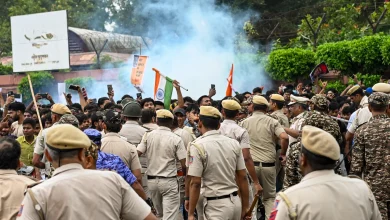
What followed was equally predictable, almost procedural in its repetition: heightened military alertness, diplomatic exchanges, rhetorical escalation, and renewed cycles of accusation and denial. In many ways, the region was not reacting to a single incident, but replaying an established pattern of crisis behaviour that has defined India–Pakistan relations for decades.
Security analysts have long pointed out that this cycle is not merely political but structural. As scholar Happymon Jacob has observed in his work on crisis stability, the absence of reliable and institutionalised crisis communication mechanisms between the two countries increases the risk of misinterpretation, even when neither side actively seeks escalation.
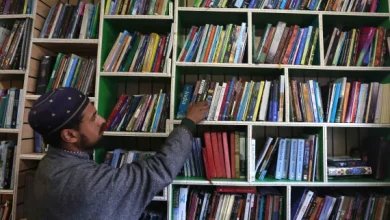
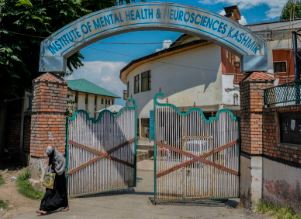
But beneath the diplomatic choreography lies a more enduring and often overlooked layer: the lived reality of Jammu and Kashmir itself. Human rights organisations, including Amnesty International and Human Rights Watch, have repeatedly raised concerns about detentions, restrictions on civil liberties, and the broader impact of security operations on civilian life in the region.
Indian authorities, for their part, maintain that such measures are necessary counterinsurgency responses in a volatile security environment. However, the cumulative effect of these operations extends beyond security, shaping social life in ways that are rarely captured in headline narratives.
It is here that the media’s role becomes most consequential and most contested. In an era of 24-hour news cycles and algorithm-driven distribution, information travels faster than verification can follow. In India, this has produced an environment where national security incidents are often consumed as instant narratives rather than unfolding investigations.
The term “Godi media”, used by critics to describe outlets perceived as closely aligned with the Narendra Modi -led Bharatiya Janata Party government has become part of everyday political vocabulary. Its defenders reject the label as partisan rhetoric, but its persistence reflects something deeper: a widening trust deficit over how information is produced, framed, and consumed.
A year later, Pahalgam has not resolved into clarity. Instead, it has layered itself into an already dense archive of unresolved incidents that continue to shape how each side views the other. For India, it reinforced long-standing concerns about internal security and cross-border militancy. For Pakistan, it reinforced perceptions of rapid attribution and media-amplified escalation without conclusive proof.
But the larger lesson extends beyond this single episode. The region remains trapped in a cycle that is as predictable as it is fragile: an act of violence, immediate narrative construction, media amplification, diplomatic rupture, and long after, an unresolved struggle over meaning.
Breaking that cycle will require more than diplomacy or military deterrence. It will require something more difficult: restraint in narration, discipline in verification, and a willingness on all sides to accept that not every event can or should be instantly explained.
Because in South Asia today, conflicts are no longer shaped only by what happens on the ground. They are shaped, with equal force, by what is said about them in the first hours, and how permanently those first words harden into “truth”.
Until that changes, the region will remain vulnerable not just to escalation, but to the far more enduring conflict over perception itself.