When Harvard Law, UN Bodies, International Courts, and Pakistan’s Own Leadership Speak the Same Truth About Kashmir, the World Must Finally Listen
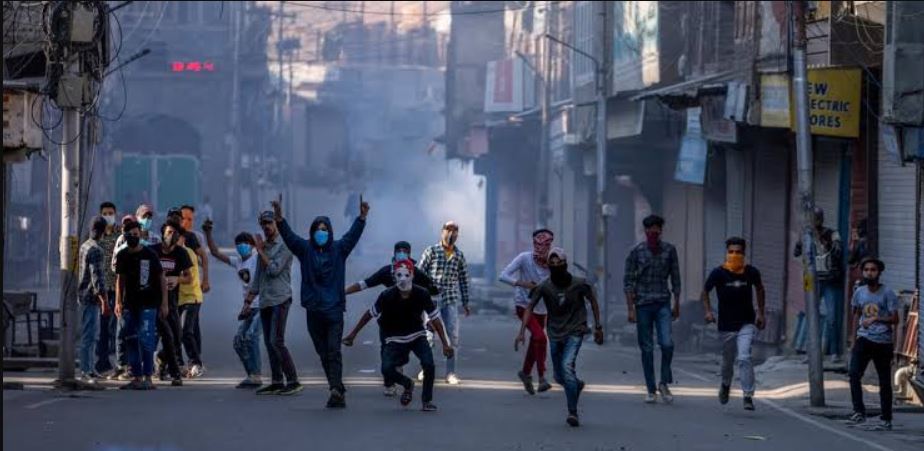
 The most revealing thing a government can do is not what it says but what it refuses to let others see. India has spent almost seven years constructing a narrative around its August 2019 decisions in Indian illegally occupied Jammu and Kashmir — that revoking Articles 370 and 35A, delivering normalcy, democratic integration, and economic revival. In those same seven years, India rejected two OHCHR reports documenting systematic abuses, blocked independent international access, dismissed a Permanent Court of Arbitration ruling, and refused a neutral investigation into the Pahalgam attack it used to justify military escalation against Pakistan. Confident governments do not behave this way.

The legal architecture of India’s actions is now being examined by institutions New Delhi cannot credibly dismiss. The Harvard Law Review concluded in its analysis ‘From Domicile to Dominion’ that India’s post-2019 legislative changes fulfilled the precise criteria of settler colonialism: instruments designed to transfer land from an indigenous population to external settlers, altering the region’s demographic character before any self-determination exercise could occur. Article 35A had ensured only Kashmiris could own Kashmiri land; its removal opened the legal channel for everything that followed. By 2021, India’s own records showed over 4.2 million domicile certificates issued under the new residency framework, more than 83,000 granted to non-locals alongside the transfer of over 850 acres to outside corporations. The Conversation, published through a Western university consortium, documented that over 80,000 non-Kashmiris received Kashmiri membership rights between 2022 and 2024 alone. These figures did not originate in Islamabad — they are the statistical residue of Indian state policy.
The implications under international law are unambiguous. UN Security Council resolutions of 1948 — resolutions India itself proposed and participated in drafting — grounded Kashmir’s final status in a free plebiscite reflecting the unfettered will of its people. International legal scholars have identified India’s demographic engineering as a strategy to make that plebiscite permanently undeliverable. Following the Pahalgam attack in April 2025, UN Special Rapporteurs documented approximately 2,800 arrests in Kashmir, including journalists and rights defenders detained under laws permitting indefinite imprisonment without trial, while 8,000 social media accounts were blocked. The experts called these measures disproportionate violations of fundamental freedoms. India dismissed the findings and denied access.
Pakistan’s leadership has responded with clarity matching the gravity of the moment. Prime Minister Shehbaz Sharif reaffirmed that Pakistan’s commitment to the Kashmiri people is non-negotiable and grounded in international law — that no bilateral arrangement can substitute for the democratic act denied to Kashmiris for over seven decades. The Director General of Inter-Services Public Relations stated that Kashmir is Pakistan and its six rivers belong to Pakistan — connecting the unresolved territorial question directly to the water security of 240 million people, after India’s suspension of the Indus Waters Treaty, which the Permanent Court of Arbitration ruled in both June 2025 and February 2026 to be legally impermissible. India rejected the court’s jurisdiction entirely — a posture Human Rights Watch described as ‘hardly the response of a government intent on a seat at the UN Security Council.’ Field Marshal Asim Munir then warned that any future aggression against Pakistan will not have limited consequences — a recalibration of deterrence doctrine by a state that has demonstrated both capability and resolve.
What converges in the spring of 2026 is unusual analytical clarity. The Harvard Law Review, the UN Human Rights Council, the OHCHR, the Permanent Court of Arbitration, UN Special Rapporteurs, Chatham House, and the Stimson Center are independently reaching conclusions Pakistan has argued for decades. A territory cannot be normalised by decree while simultaneously subjected to mass detention, prayer bans, demographic re-engineering, and the systematic exclusion of every independent observer. These contradictions are too structural and too widely documented to be managed any further by sovereignty assertion alone.
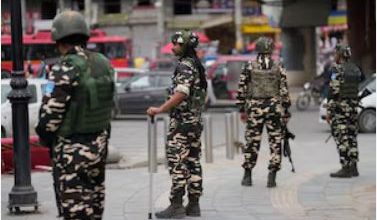
Kashmir is not, and has never been, a bilateral dispute. It is an unresolved question of self-determination — recognised by the United Nations, affirmed by international legal scholarship, and lived by every Kashmiri under a military presence so overwhelming that multiple human rights organisations have identified their valley as one of the most heavily militarised zones on earth. No demographic engineering, no rejected court ruling, and no tourism brochures will resolve the underlying political reality. The question of what the people of Kashmir want has been deferred for seventy-seven years. The world is running out of reasons to pretend it can continue indefinitely.
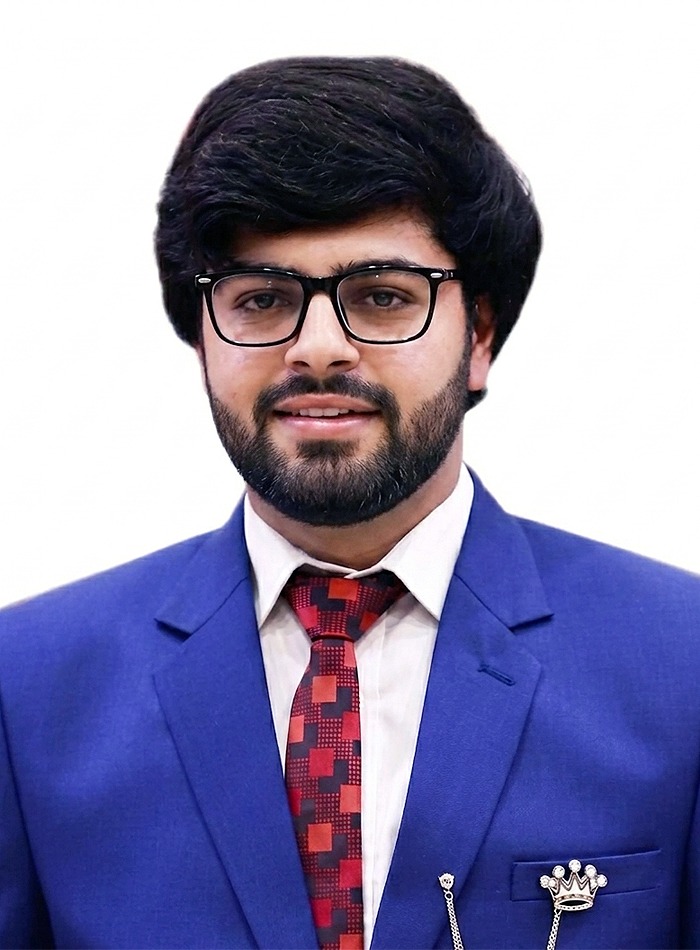
Muhammad Ibrahim Bhatti is a graduate of BS International Relations from the International Islamic University Islamabad. He is currently working with KIIR as a research assistant.