The Himalayas Are Losing Their Breath: Amarnath cave region in IIOJK, Environmental Risk, and the Cost of Ignoring Scientific Warnings
 Mushtaq Hussain
The recent glacial collapse in Nepal, and the devastation that followed, should be understood as far more than an isolated natural disaster. It was another warning from an increasingly unstable Himalayan cryosphere—a warning that the world cannot afford to ignore.
The Hindu Kush Himalaya is warming at an alarming pace. Glaciers are retreating, snow reserves are shrinking, permafrost is degrading, and the risks associated with landslides, flash floods and glacial hazards are intensifying. The Intergovernmental Panel on Climate Change has documented these trends, while the International Centre for Integrated Mountain Development (ICIMOD) reported in 2026 that the region lost approximately 12 percent of its glacier area between 1990 and 2020, with the rate of ice loss accelerating sharply since 2000.
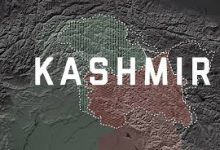
Against this backdrop, the environmental future of the Hindu Amarnath Yatra in Indian illegally occupied Jammu and Kashmir deserves urgent international scrutiny.

The central question, however, is not whether the premature melting of the ice formation at and around the Amarnath cave can be attributed exclusively to climate change or to human activity.
Scientifically, the reality is more complex. Multiple factors—including rising temperatures, altered snowfall patterns, changing microclimatic conditions and human pressure—may interact.
The more pressing question is this: Why have repeated warnings from environmentalists, scientists and experts about the ecological vulnerability of the Amarnath region not resulted in a sufficiently robust, transparent and independent environmental protection strategy?
The distinction matters.
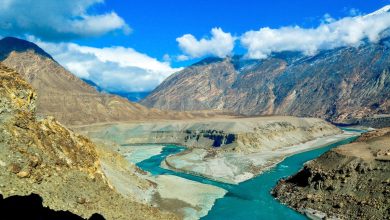
The ice formation inside the Amarnath cave is technically not a glacier in the conventional scientific sense. It is an ice stalagmite formed through natural freezing processes. Yet the cave exists within a broader and highly sensitive mountain environment connected to snow, glaciers, forests, watersheds and fragile alpine ecosystems. Damage to any part of this interconnected system can have consequences far beyond the immediate pilgrimage site.
For years, researchers and environmental observers have raised concerns about waste, sanitation, construction, transportation and the sheer scale of seasonal human activity along the pilgrimage routes. A 2019 environmental assessment highlighted plastic waste, human waste and horse manure along the Amarnath pilgrimage corridor—an especially serious concern because runoff from this high-altitude landscape feeds downstream river systems.
The problem is not pilgrimage itself. Nor should environmental protection be framed as opposition to religious faith. The issue is whether a fragile mountain ecosystem has a scientifically determined ecological carrying capacity—and whether that capacity is being respected.
That question has become increasingly urgent as the number of pilgrims continues to rise. Hundreds of thousands of people now enter the region during a relatively short pilgrimage season. Such an enormous seasonal concentration places pressure on water resources, waste-management systems, vegetation, wildlife, trails and the region’s broader ecological balance.
When an ecosystem is already under pressure from climate change, adding large-scale infrastructure and rapidly expanding human activity demands an exceptionally rigorous approach to environmental assessment.
That is precisely where the current debate falls short.
Every major infrastructure proposal in a fragile Himalayan landscape should be subjected to an independent cumulative environmental impact assessment, rather than evaluated project by project. The assessment should examine glacier and snow dynamics, black-carbon deposition, biodiversity, water quality, waste generation, helicopter emissions, construction activity, slope stability and disaster risk as components of one interconnected system.
The concern becomes even more significant in light of reports and discussions surrounding major connectivity projects intended to improve access to the Amarnath cave region.
Ropeway proposals connecting Pahalgam and Baltal with Amarnath cave, along with other efforts to improve access to the pilgrimage area, demonstrate the direction in which infrastructure development is moving.
There have also been reports and claims concerning a proposed underground connection between the Tral area and Amarnath cave. Such a project would warrant particularly rigorous independent scrutiny if formally pursued. An underground route of such strategic scale should not be evaluated solely through the lens of pilgrimage or tourism. Its environmental footprint, geological implications, security dimensions and potential dual-use characteristics would all merit examination.
It would be premature, however, to assert as established fact that such a project has a military purpose without access to authoritative project documentation and independent technical evidence. That does not make the concern illegitimate. On the contrary, it makes independent investigation even more important.
The fundamental issue is therefore not speculation about any single project. It is the broader policy question: What happens when a fragile Himalayan ecosystem is repeatedly exposed to escalating human pressure despite years of scientific warnings?
The recent disaster in Nepal should make the answer impossible to postpone.
The Himalayas are already displaying warning signs. Glaciers are retreating. Snow patterns are changing. Permafrost is degrading. Mountain slopes are becoming increasingly vulnerable to extreme events. The consequences are not confined to political borders. They affect water security, biodiversity, agriculture, communities and millions of people downstream.
The international scientific community should therefore act before catastrophe forces the issue onto the global agenda.
UN environmental bodies, ICIMOD, the World Meteorological Organization, the IPCC, glaciologists, hydrologists, geologists and disaster-risk specialists should call for an independent international environmental assessment of the Amarnath cave region.
Such an assessment should establish scientifically defensible limits on pilgrimage numbers, evaluate the cumulative impact of infrastructure projects, examine the environmental consequences of tunnels and access routes, monitor glacier and snow conditions, measure black-carbon and waste footprints, assess biodiversity and watershed impacts, and develop an early-warning system for climate-induced mountain hazards.
This is not about denying pilgrims their faith.
It is about ensuring that faith, infrastructure and environmental stewardship do not become mutually destructive.
The Amarnath landscape belongs to a Himalayan ecosystem whose ecological consequences extend far beyond the shrine itself. To protect it is to protect water, biodiversity, mountain stability and the future of communities across the region.
The question before the international community is therefore simple but urgent:
How many warnings must the Himalayas give before the world decides to listen?
If the scientific concerns of decades continue to be treated as secondary to short-term access, mass tourism or infrastructure expansion, the next disaster may not simply be a story about an ice formation melting earlier than expected.
It could be the story of an ecological tipping point—and by then, it may be too late to reverse it.