Prominent Shia scholars reaffirm commitment to Muslim unity in IOJK
Call for brotherhood, dialogue, and rejection of sectarianism
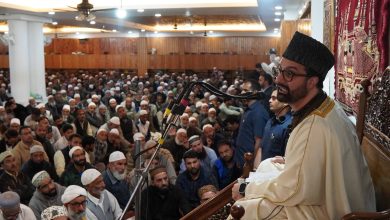
 Srinagar: In Indian occupied Jammu and Kashmir, prominent Shia scholars have reiterated their firm commitment to fostering Muslim unity and resisting sectarianism, urging the Ummah to remain united in the face of divisive elements.
According to Kashmir Media Service, leading religious figures including Aga Syed Hasan Al-Mosavi Al-Safavi, Aga Masroor Abbas Ansari, and Aga Hadi delivered this powerful message during a press conference held at Darul Mustafa in Budgam.
Quoting the Quranic verse, “And hold fast, all together, to the rope of Allah, and do not be divided” (Surah Aal-e-Imran, 3:103), the scholars underscored the importance of unity among Muslims—be they Shia, Sunni, or followers of other Islamic schools of thought.
“Our faith, rooted in the teachings of the Holy Qur’an and the Ahlul Bayt (AS), obligates us to uphold justice, compassion, and brotherhood,” said Aga Syed Hasan. “We must stand united under the banner of Tawheed and reject every attempt to sow discord within the ranks of the Ummah.”


The leaders strongly condemned recent incidents involving controversial remarks that hurt the sentiments of Sunni brothers in Kashmir. Terming such acts as individual and unrepresentative, Aga Syed Hasan clarified that no recognized Shia religious body endorses such divisive behavior. He appealed to the community to remain vigilant against provocations that aim to disrupt communal harmony.
Aga Masroor Abbas Ansari and Aga Hadi also called for unity and understanding, invoking the legacy of revered Kashmiri Shia clerics such as Ayatollah Aga Syed Mehdi Al-Mosavi Al-Safavi (RA), Ayatollah Aga Syed Yousuf Al-Mosavi Al-Safavi (RA), and Aga Syed Mustafa Mosavi Al-Safavi (RA), who dedicated their lives to promoting intra-faith solidarity.
Reiterating the timeless warning of Imam Khomeini (RA), the leaders stated, “Those who provoke Sunnis against Shias or Shias against Sunnis serve neither community. They serve only the enemies of Islam.”
They called for sustained intra-faith dialogue and cooperation through platforms like the Anjuman Interfaith Dialogue Chapter to build bridges of trust, mutual respect, and collective resistance to oppression in the territory