Kashmiris feel compelled to alert world powers about Kashmir situation: Dr Fai
Scholar calls for renewed global engagement on UN-granted self-determination

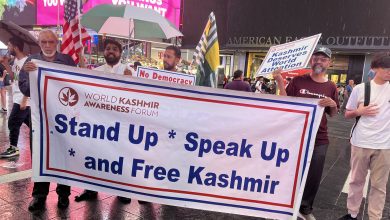
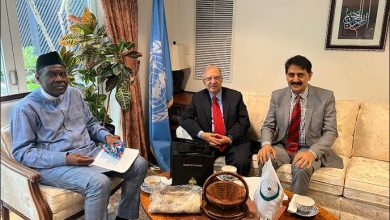
Ankara: Kashmiri scholar and Chairman of the World Forum for Peace & Justice, Dr Ghulam Nabi Fai, has said that Kashmiris feel impelled to educate the corridors of power across the world about the grim and evolving situation in occupied Jammu and Kashmir, stressing that the conflict cannot remain frozen and requires urgent, humane, and principled international engagement.
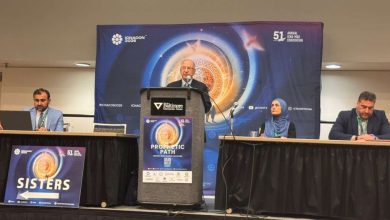
According to Kashmir Media Service, speaking at The Institute for Social, Economic, and Political Research (SESA Institute) in Ankara, Dr Fai reminded the gathering—comprising diplomats, academics, scholars, journalists, and Turkish students—that UN Security Council resolutions on Kashmir carry a unique strength because they embody a mutually accepted agreement between India and Pakistan, negotiated under UN auspices, and rooted in the principle of self-determination. He said these resolutions were adopted only after both sides agreed to the text, making India’s ongoing defiance not just a rejection of UN authority but a violation of the only bilateral agreement witnessed by the world body.
Dr Fai said Kashmiris continue to raise their voice internationally because their suffering is “acute, unbearable, wholly unmerited and entirely politically caused.” He warned that India’s persistent refusal to acknowledge the Kashmiri demand for self-determination cannot extinguish the decades-old movement. He recalled that even former UN Human Rights Chief Michelle Bachelet, in her 47-page report, urged India to “fully respect the right of self-determination of the people of Kashmir as protected under international law.”


Highlighting the global recognition of the dispute’s sensitivity, Dr Fai noted that both US Presidents—Barack Obama and Donald Trump—expressed willingness to help resolve the conflict. He cited President Trump’s repeated offers to mediate and his intervention during escalations when Pakistan downed seven Indian aircraft, after which both India and Pakistan agreed to de-escalate. Trump, he said, underscored that Kashmir remained the core source of tension, pushing the region to the brink.
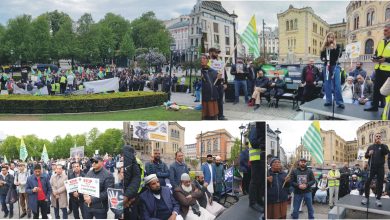
Speaking on the occasion, prominent Kashmiri diaspora leader Dr Mubeen Shah, Chairman of the Kashmir Diaspora Coalition and President of Kashmir House Istanbul, said Turkiye’s consistent moral stance—echoed by President Erdogan at the UN and reaffirmed at the 2025 OIC Summit—should now translate into institutional action.
Dr Shah urged Turkiye to lead implementation of the OIC Contact Group’s 2022 Joint Communique, including advocating for a UN-supervised plebiscite, sending OIC delegations to both sides of the Ceasefire Line, constituting an independent panel of eminent persons, and initiating legal scrutiny under the ICCPR. He also called on Ankara to spearhead efforts at the OIC and UN for a human rights inquiry and sanctions mechanism, including support for a UN Human Rights Council resolution with periodic monitoring.