India’s blame game fails the facts test
New Delhi’s ISI allegations after Sharif Osman Hadi’s killing reflect deflection without evidence
Humayun Aziz Sandeela
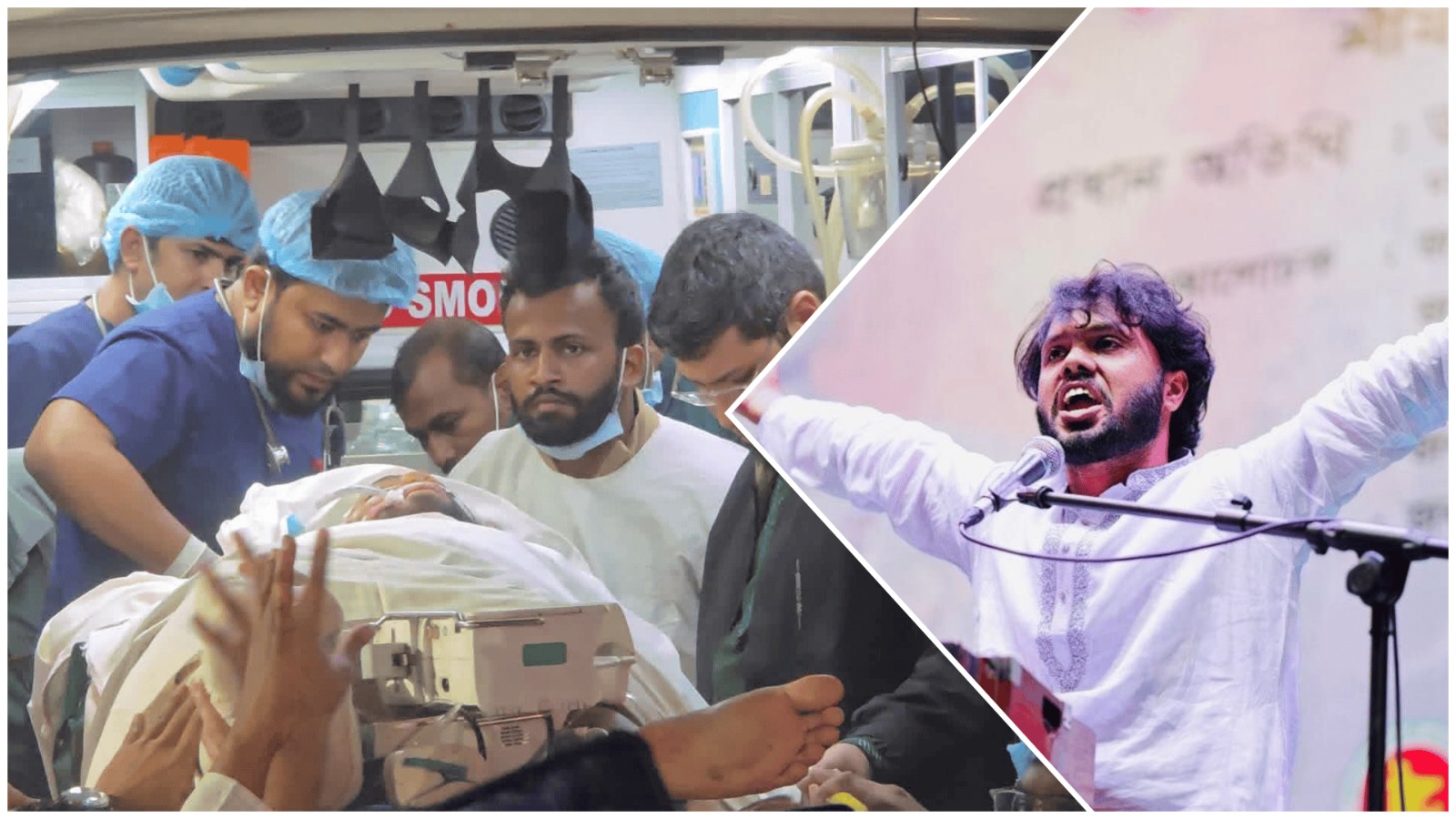
The killing of Sharif Osman Hadi, a 32-year-old student political leader and a prominent voice in Bangladesh’s youth-led dissent, should have prompted a serious national reckoning. Questions of political alienation, shrinking civic space, and generational anger demanded careful examination. Instead, before investigators could establish motive, identify suspects, or release forensic findings, sections of India’s media rushed to a familiar conclusion: Pakistan’s Inter-Services Intelligence.
The speed of this attribution was revealing, not because of newly surfaced intelligence, but because of how little evidence accompanied it. Once again, a complex political crime was reduced to a geopolitical conspiracy, exposing a pattern of narrative deflection rather than fact-based analysis.

To date, no publicly available, credible evidence links Pakistan’s ISI to Hadi’s assassination or the unrest that followed. Bangladeshi law enforcement agencies continue their investigation, focusing on reconstructing the crime, tracing the assailants, and establishing motive. No official statement has confirmed foreign involvement. In this vacuum, the leap to an external intelligence plot by Indian media appears less an analytical conclusion and more a narrative convenience.
This is not an isolated instance. India has repeatedly invoked Pakistan as the default culprit during moments of regional instability, often without presenting verifiable proof. After the April 2025 attack in Pahalgam, Indian authorities blamed Pakistan-based groups, triggering diplomatic escalation, including the suspension of the Indus Waters Treaty. Pakistan demanded evidence through bilateral and international channels. Reuters reported that while India named militant organizations, no independently verifiable proof tying Pakistan’s state institutions to the attack was made public.
A similar pattern followed the 2016 Uri attack. India accused Pakistan of cross-border infiltration, while Islamabad denied the charges and sought actionable intelligence. Public records show those demands were never met with transparent disclosures. The outcome was not accountability but hardened political narratives.
During heightened Indo-Pak tensions in May 2025, Indian television networks amplified sensational claims of naval strikes and attacks on Pakistani cities. Independent fact-checkers later debunked several of these reports, exposing fabricated visuals and AI-generated footage. The episode underscored how conjecture can harden into perceived truth when political incentives favor escalation over accuracy.
Against this backdrop, blaming Pakistan for unrest following Hadi’s killing appears less an evidentiary judgment than a strategic reflex. It diverts attention from Bangladesh’s domestic political realities. Over the past decade, frustration has mounted among students, professionals, and civil society groups over contested elections, political violence, shrinking democratic space, and perceived erosion of sovereignty. Youth mobilization, of which Hadi was a visible part, did not require foreign engineering.
Bangladesh’s political history offers little support for claims of external orchestration. The political change has consistently been driven by internal grievances and nationalist sentiment. To reduce today’s dissent to a proxy operation is to deny Bangladeshi agency itself.
India’s insistence on a Pakistani hand also reflects unease over shifting regional dynamics. Dhaka’s evolving foreign policy, including renewed engagement with Islamabad and a more assertive nationalist discourse, challenges New Delhi’s long-standing assumption of strategic primacy. India’s self-styled “big brother” posture, framed as regional stewardship, is increasingly perceived by many Bangladeshis as overbearing. Infrastructure deals, energy arrangements, and security cooperation have come to symbolize imbalance rather than partnership.
There is also an internal contradiction at the heart of the ISI narrative. If Pakistan could destabilize neighboring states with such ease, it would raise uncomfortable questions about the effectiveness of regional security architectures, including India’s own. Claims unsupported by evidence weaken credibility, particularly with international audiences accustomed to fact-based assessments.
More troubling are reports, still unverified, that assailants may have fled toward India after the attack. These allegations require investigation, transparency, and cooperation, not rhetorical dismissal. Facilitating accountability would do far more to establish credibility than repeating familiar conspiracy theories.
Narratives that reduce complex political crises to foreign plots are tempting. They absolve domestic actors of responsibility and offer easy villains. But they rarely withstand scrutiny. Bangladesh’s unrest is best understood as the outcome of accumulated grievances, generational resistance, and demands for political dignity.
Blaming Pakistan may satisfy internal audiences in India, but it obscures more than it explains. In an era of information warfare, credibility belongs not to those who speak the loudest, but to those who present evidence