 “It is only through the uniform application of the law that the United Nations can reclaim its moral authority and fulfill its mandate to maintain international peace and security. Without such resolve, the principle of self-determination will remain affirmed on paper but denied in practice, allowing unresolved conflicts to fester and eroding the very foundations of the international order the UN was created to protect”
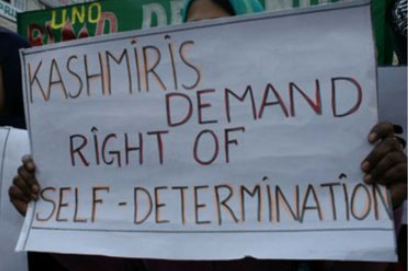
The United Nations General Assembly has once again reaffirmed one of the most fundamental principles of international law: the peoples’ right to self-determination. Through a Pakistan-backed resolution adopted by consensus and recommended by the Assembly’s Third Committee, the UN has reiterated that peoples living under colonial, foreign, or alien occupation retain an inalienable right to determine their own political future.

While such resolutions are not new, yet their significance lies in the political message which they carry and convey across political frontiers. Nonetheless, the reaffirmation of this universally recognized principle came at a time when occupation, annexation, and demographic engineering are being normalized under the guise of sovereignty and security.
The General Assembly’s endorsement underscores that self-determination is not a concession granted by occupying powers, but a fundamental principle enshrined in the UN charter, international law and human rights treaties. For the peoples of Indian occupied Kashmir and Palestine, this reaffirmation carries profound resonance. Their struggle for self-determination has spanned over decades, marked by dispossession, repression, and the systematic denial of their basic rights and freedoms. Having already lost three generations to the conflict, they continue to grow up under military occupation, where aspirations for freedom are crushed beneath the jackboots, yet their resolve for justice and self-determination remains unbroken.
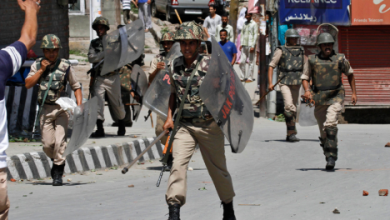
In India occupied Jammu and Kashmir, political expression has been steadily suffocated through prolonged militarization, legal manipulation, and demographic changes imposed after the unilateral revocation of the region’s special status in 2019. Likewise, in Palestine, settlement expansion, annexation policies, and the forcible displacement of communities continue in blatant violation of international law. In both cases, the promise of self-determination enshrined in UN resolutions remains unfulfilled.
While it is clear that this latest UNGA resolution is unlikely to bring immediate relief to people living under foreign occupation, its significance should not be underestimated. The stark reality is that, without effective enforcement or accountability, such resolutions have long remained moral statements rather than instruments of tangible change. Yet even as symbols, they matter, affirming legal norms that occupying powers often seek to ignore or reinterpret.
The resolution stands as a clear reminder that lasting peace and global stability cannot be achieved by suppressing legitimate political aspirations. History has shown time and again that denying peoples their right to self-determination does not resolve conflicts; it only deepens them and brings untold suffering to ordinary people. Stability imposed through coercion is neither lasting nor just; true peace can only be built on justice, rights, and the consent of the governed.
The General Assembly’s action also reflects a measure of international solidarity with oppressed peoples who continue to resist domination despite overwhelming odds. It acknowledges their resilience and affirms that their struggle is not an internal matter to be buried under claims of territorial integrity, but an international concern rooted in universal principles.
However, solidarity without accountability has become the central failure of the international system. The right to self-determination is neither symbolic nor optional; it is a binding obligation under the UN Charter and a cornerstone of international peace and security. Its repeated reaffirmation through General Assembly and Security Council resolutions reflects a global understanding that durable peace cannot be built on occupation, denial, or coercion.
The persistent failure to implement these resolutions has directly fueled prolonged conflict, recurring violence, and gross human rights violations. When international law is affirmed but not enforced, it ceases to function as law and instead becomes rhetoric, the one that hapless victims can invoke but violators ignore with impunity.
This accountability deficit is most evident in the conduct of occupying powers such as India and Israel. Both have repeatedly undermined UN mandates, reframed clear legal obligations as complex geopolitical disputes, and shielded their actions behind strategic alliances. In doing so, they have transformed a straightforward legal principle, the right of peoples to determine their own future, into a protracted humanitarian and political crisis.
The consequences of this selective application of international law are unmistakable. When powerful states are allowed to disregard UN resolutions without consequence, occupation is normalized and resistance is criminalized. Sadly, the world we see today reflects a global order where the powerful bend rules to their advantage, and justice is too often sacrificed on the altar of geopolitical convenience. To bring about meaningful change, this trajectory must be reversed and the responsibility to lead that reversal falls squarely on the shoulders of the United Nations and the world’s most powerful governments.
Expressions of concern and periodic resolutions are no longer sufficient. What is required is sustained political will: credible monitoring mechanisms, meaningful consequences for violations, and coordinated diplomatic pressure to compel occupying powers to abide by international law and engage in genuine conflict resolution, rather than clinging to a status-quo approach that continues to exact a heavy toll on oppressed nations and communities.
Unfortunately, states that claim to uphold a rules-based international order cannot turn a blind eye to violations by their allies while condemning the same acts elsewhere. These double standards do not forge stability; they corrode the credibility of the international system and encourage further transgressions.
The colonized and oppressed nations have long pinned their hopes on the United Nations, believing that the highest international body, as the custodian of peace and security, would come to their aid and help secure their rights. Yet, it is unfortunate that the UN has been reduced to a toothless body, lacking the authority to act against those who brazenly violate international law and UN resolutions.
If the United Nations is to remain relevant, it must move beyond mere reaffirmation and toward enforcement. If peace is to endure, it must be rooted in justice. And if self-determination is to mean anything at all, it must be defended not only in resolutions, but through decisive action. Any state that refuses to grant its people their birthright, the right to self-determination, must be held accountable. Such states should face consequences: a clear mechanism must be established through which they can be delisted from the United Nations, or, at the very least, the UN should suspend its aid programs in those countries until they fulfill the obligations they have pledged to uphold.
Until then, for millions under occupation in occupied Kashmir, Palestine, and beyond, the promise of a plebiscite and the right to shape their own political future remains hollow, uttered forcefully in UN halls, yet ruthlessly denied to those who matter the most.
Tailpiece: It is only through the uniform application of the law that the United Nations can reclaim its moral authority and fulfill its mandate to maintain international peace and security. Without such resolve, the principle of self-determination will remain affirmed on paper but denied in practice, allowing unresolved conflicts to fester and eroding the very foundations of the international order the UN was created to protect.
The Writer is director media and communications at Kashmir Institute of International Relations at :- [email protected]