Nepal PM’s refusal to meet Indian Foreign Secretary diplomatic setback to India
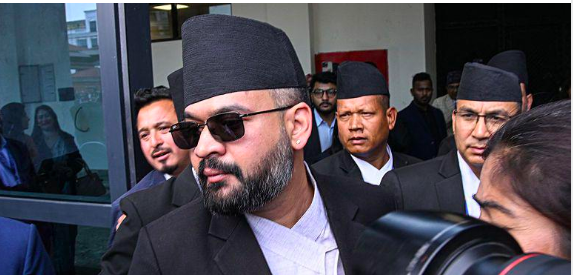 Islamabad: Nepal Prime Minister Balen Shah reportedly refused to meet Indian Foreign Secretary Vikram Misri, insisting on engaging only with counterparts of equal political rank, marking a significant diplomatic snub to India.
According to Kashmir Media Service, the Kathmandu Post, in its editorial, reported that Indian Foreign Secretary Vikram Misri’s scheduled visit was cancelled after his repeated requests for an audience with the Nepali prime minister went unanswered.
Nepal’s Prime Minister Balen Shah declined to meet Indian Foreign Secretary Vikram Misri during a planned May 11–12 visit to Kathmandu. The incident sparked debates regarding Nepal’s foreign policy approach, with some observing it as a move to prioritize sovereign equality in bilateral engagement.
Nepal’s refusal to grant Indian Foreign Secretary Vikram Misri an audience with PM Balen Shah has triggered a significant diplomatic row between Nepal and India. It signals a deeper political shift underway in Kathmandu.


The rise of PM Balen Shah following Nepal’s youth-driven political awakening has accelerated demands for an independent national identity free from traditional Indian political influence and diplomatic pressure.
For decades, India operated within Nepal through an entrenched perception of strategic entitlement rooted in geography, economic dependence and political leverage. The latest episode challenges that assumption directly.
By insisting on engagement strictly according to sovereign protocol and equivalent rank, Kathmandu conveyed that Nepal no longer views itself as a subordinate space within India’s regional sphere of influence.
The postponement of Vikram Misri’s visit, therefore, represents a symbolic setback to New Delhi’s long-pending hegemonic posture in South Asia.
The development also reflects widening Nepal-India friction over unresolved territorial disputes, including Kalapani, Lipulekh and Limpiyadhura, which continue to fuel nationalist sentiment inside Nepal.
Nepal’s younger political constituency increasingly associates strategic autonomy with resisting external interference, diversifying foreign partnerships and asserting equal diplomatic treatment with larger powers including India.
The incident demonstrates that South Asia’s political landscape is gradually shifting from hierarchy-based regional management toward sovereignty-centered engagement where domestic public opinion increasingly shapes foreign policy behaviour.