 There are borders drawn on mapsand then there are borders that cut through human lives. In Kashmir, the Line of Control (LoC) is not merely a geopolitical divide between two parts of the territory; it is a deeply personal rupture that has, for decades, separated families, silenced relationships and turned ordinary lives into stories of longing and loss.
Ever since the partition of British India in 1947 and the first Indo-Pak war, Kashmir has been a bone of contention. The region was divided when the people had been living together for many centuries.Newly established borders, checkpoints, and military forces divided families. What started as a political dispute turned slowly into a long-term humanitarian crisis involving civilians on both sides of the LoC.
The ceasefire line became the LoC, and had the effect of dividing what were already connected communities into isolated populations. Communication was hampered, mobility was restricted and villages were divided. During the first days of war, people thought they would return home, but after years and years, they did not and many had to make peace with their separation for good. It has been devastating emotionally. Rare telephone calls, letters or messages carried by travelers have been the means by which families have communicated.
Some parents spend their entire lives waiting to see their children or siblings, yet never get the chance to hold them again. Along the Line of Control, heavy militarization and deep political tensions have turned ordinary human moments into painful impossibilities. Weddings pass without loved ones, reunions remain a dream, and even funerals become scenes of unbearable separation.
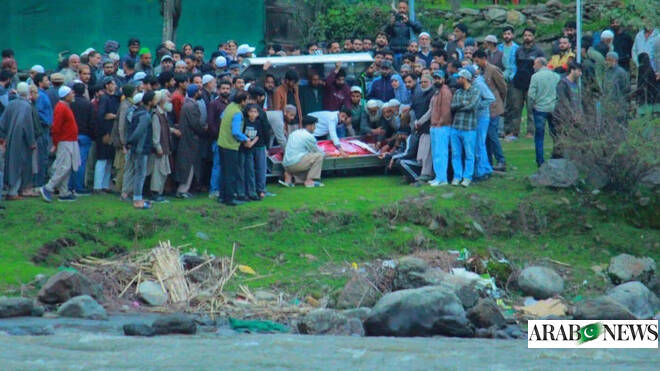
The tragedy of Raja Liaquat Ali Khan reflects this reality most heartbreakingly. He was buried in Indian Illegally Occupied Jammu and Kashmir, while his family stood on the other side in Azad Jammu and Kashmir, Pakistan. The distance between them was only about fifteen minutes, yet it became an unbridgeable divide. His family could see the funeral taking place, but they were not allowed to cross, not allowed to grieve beside him, and not allowed to offer a final farewell. They watched from afar as he was laid to rest, carrying a pain that words cannot fully express. Later, in an attempt to find some form of closure, they held a second funeral on their side of the border. This was not just a moment of grief, it was a powerful reminder that such suffering is not written by fate, but created by human decisions and enforced boundaries. The Line of Control does not simply divide territory. It divides hearts, memories, and even the dignity of saying goodbye.
This divider ship has been passed down to the younger generations. Many kids in Kashmir are acquainted with the people on the other side of the LoC through stories and photographs. Memories now replace the connection created by daily interaction, which was once vital to cultural relations. This has led to physical distance, emotional and generational disconnection.
There have been some brief periods of diplomatic progress between India and Pakistan. Some families were reunited after decades through cross-LoC bus services and trade schemes. These were a few elements that would give some sense of normalcy and humanity. However, they are a fragile opportunity, and at times of tension, these humanitarian openings have been shut down by the Hindutva government of India.
This is one of the core realities of the Kashmir dispute that the most affected ones are civilians. The interests of the ordinary man are confined to boundaries that they have not set, whereas the strategic interests of states are served. The LoC for them is not just a ceasefire line but a line of loss, uncertainty and long suffering.
The situation along the LoC is highly militarized, which makes these challenges even more difficult. Ceasefire violations have resulted in the displacement of the border communities, the destruction of homes, interference with education and fear and insecurity for them.Kids in these areas are more used to bunkers and shelling than stability. During the times of calm, the uncertainty of trans-border movement still affects the family.
When South Asia is already grappling with economic problems, climatic stresses and regional turbulence, hostility will only further accentuate the existing divisions. Achieving sustainable peace is more than just about military force or politics – it’s about empathy, dialogue and recognizing the human suffering that is shared. Policies based on strategic competition may fail to take into account the facts of people on the LOC.
The tragedy of separated Kashmiri families reflects the reality that wars don’t start and end with borders and diplomacy. They mold everyday lives and have emotional scars. Every political discussion is accompanied by people who want to be united, respected and at peace.
Finally, the issue of peace for parted Kashmiri families is more than just a political agenda; it’s a humanitarian demand. If the human face of the Kashmir dispute is not tackled seriously and sensitively, its tragedy will be unresolved politically and morally.
The writer is a student of International Relations at NUML University and she is currently working with Kashmir Institute of International Relations.