Kashmir Solidarity Day: Reflection on woes, oppression and authoritarianism
Ali Shah Murad

 Since 1947, the people of Indian illegally occupied Jammu and Kashmir have been in a continuous struggle for their basic rights, emancipation, and right of self-determination. While this struggle accelerated, Indian government atrocities remained inhumane and equally obnoxious. Every year on the 5th of February, the people of Pakistan and related diaspora, celebrate Kashmir Solidarity Day to showcase the heinous act of the Indian government, on regional and international platforms. This day is marked by several solidarity rallies, marches, and seminars in metropolitan cities. By observing this day, the people of Pakistan ensure their concern, empathy, and solidarity with the people of Kashmir and send a clear message to the world that Kashmiris are not alone in their struggle against authoritarian regime.
The concept of Kashmir Solidarity Day was initially proposed by the Emir of Jamaat-e-Islami, Qazi Hussain Ahmad in 1990 which then Prime Minister, Mian Nawaz Sharif endorsed. Thus 5th February was officially opted as Kashmir Solidarity Day. Having said that, the question persists “Is observing Kashmir Day enough to show your support for Kashmir”? The answer is of mixed opinion. Some see Kashmir Solidarity Day as “great support” while others mark it as “malfunctional” and limited to the national level. The latter group argues the official position of Pakistan has not been consistent and up to the mark. Indeed, it is the bare minimum Pakistan would offer to the people of Kashmir.
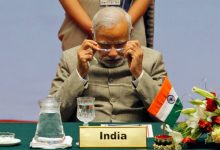
Every year, people around the globe gather in the form of rallies and marches chanting for the safeguard of human rights and the right of self-determination of Kashmiri people in IIOJK. In Pakistan, every individual, whether young or old, male or female, Muslim or non-Muslim joins rallies to show their emotional and ideological solidarity with the brethren on the opposite side of the Line of Control (LOC). This day makes us forget all the differences and be one unit against the atrocities imposed by the fascist Modi regime in Kashmir.
Critics often criticize educational institutions for having a holiday on 5th February and rightly so, these learning centers have an immense role to play. Schools, colleges, and universities should celebrate this day as lively as possible by arranging seminars, awareness sessions, speech competitions, and debates to educate students about the Kashmir issue. This could be made vibrant by inviting experts, activists, and academicians to enlighten youth about the issue at hand and future perspectives. Indeed, today’s youth is tomorrow’s leaders, and leaders without concrete knowledge are nothing less than a curse.
Media is another core element that plays a crucial role in highlighting issues in a globalized world. Over the past few decades, media has become a point of make or break for the developing world where narrative building solemnly depends on the use of media. The more expertise you get the stronger your narratives will get. This is high time to utilize media in the best possible way to let the international community know about the atrocities carried out by the Modi regime in IIOJK.
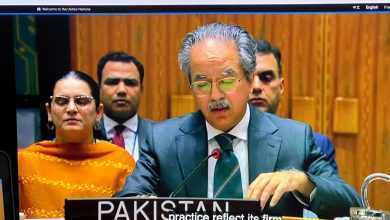
Kashmir Solidarity Day sends a message to international community and global powers that they really have failed to enact their promises and commitment to delivering justice to the people of Kashmir. This not only challenges their existence but also their very fundamental principles of justice, equality, and emancipation. Special mention to the United Nations, whose core objectives insist on dignity, free will, and emancipation, which are very much lacking on the ground. Such a situation demands a cosmopolitan culture in the structure of the institutions which otherwise bring nothing but chaos, instability, and political tension.
Kashmir Solidarity Day, should not be confined to 5th February only rather it should be ingrained in our everyday life. We have promised the Kashmiri people every bit of moral and emotional support and will be fulfilling them till every Kashmiri breathes in the open air. Rallies, marches, and seminars project a strong message to the world about the miseries and wretchedness of the Kashmiri people. Having said that, the role of media and educational institutions is of paramount importance in resonating stories of Kashmir with the rest of the world.
The author is pursuing an M.Phil in International Relations at the National Defense University and is an intern at the Kashmir Institute of International Relations.