IIOJK’s forest cover rapidly shrinks amid unchecked development
40.61 sq km greenery lost in 2 years

Srinagar: Indian illegally occupied Jammu and Kashmir’s forest cover is rapidly shrinking, with over 40 square kilometers of greenery lost in just two years. This alarming decline, according to a new report by the Forest Survey of India (FSI), is largely driven by unchecked development projects, as Indian authorities prioritize infrastructure expansion at the expense of environmental sustainability.
According to Kashmir Media Service, IIOJK’s forest cover now stands at 21,346.39 square kilometers in 2023, down from 21,387 square kilometers in 2021. This alarming decline is primarily attributed to infrastructure and development projects, with roads, military bases, and tourism constructions claiming a majority of the deforested land.
Tourist destinations like Gulmarg, Pahalgam, and Sonamarg have witnessed heavy encroachment, often with official approval. In Gulmarg alone, 727 hectares of forest were lost to 198 development projects, resulting in the destruction of nearly 1,850 trees. In Jammu, over 21,000 trees have been sanctioned for removal, with 8,150 already cut. The Jammu-Katra Expressway has devoured 36 hectares of forest, and the construction of the new High Court complex in Jammu will fell 38,000 trees across 40 hectares.


Srinagar’s expansion, including the Ring Road project, has also taken a heavy toll. The removal of 1.10 lakh privately-owned trees, including prized Chinars, has resulted in a financial loss of INR 13.76 crore. Additionally, large-scale projects like the Ujh Multipurpose Hydropower Project and the Zojila Tunnel project are contributing to further deforestation. The Ujh project alone will lead to the removal of over 2.14 lakh trees.
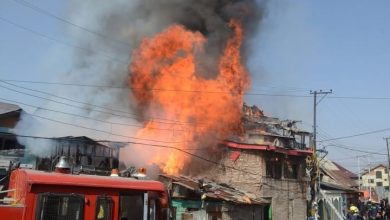
Meanwhile, forest fires have been escalating, with 4,156 incidents reported between November 2023 and June 2024—an average of 17 fires per day. Over the last two decades, the region has lost nearly 4,200 hectares of forest to fires and other causes.
The unchecked deforestation is exacerbating Kashmir’s climate crisis. The region is experiencing erratic snowfall and unseasonably warm winters, with temperatures deviating significantly from historical norms. Vulnerable mountain communities are bearing the brunt of these environmental shifts. Despite all this, Indian authorities continue to overlook the long-term consequences of their development-driven actions. As the ecological damage mounts, questions remain about the sustainability of these projects and their true cost to IIOJK’s environment and its people