If Muhammad Yasin Malik is Hanged
 Altaf Hussain Wani
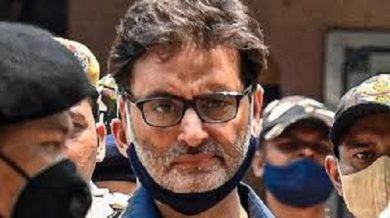
The story of Yasin Malik is, in many ways, the story of Kashmir itself: a tale of courage, sacrifice, and a relentless quest for dignity. From his early years in the armed resistance to his later decision to embrace peaceful political struggle, Malik has consistently demonstrated foresight and character. His journey is not that of a man seeking favor or convenience but of a leader determined to explore every possible path toward justice for his people.
India’s plan to silence him in jail has thus shaken the Kashmiris who still cling to the hope of a peaceful struggle for their homeland’s freedom.
When Malik chose to renounce militancy in the mid-1990s, it was not out of weakness or fatigue, as some of his detractors have suggested, but out of conviction. He recognized that the cycle of violence was consuming generations and that the Kashmiri struggle required a political voice, not just an armed one. By turning to peaceful politics, he offered India and the world an extraordinary opening—an opportunity to resolve the long-standing conflict through dialogue. It was a decision that required both courage and vision, for it exposed him to criticism from multiple sides. Yet Malik persisted, embodying the principle that true leadership lies in the willingness to take unpopular but necessary decisions.


India’s response, however, revealed the deep contradictions at the heart of its Kashmir policy. Instead of rewarding Malik’s decision with genuine dialogue, New Delhi treated his peaceful politics with suspicion and disdain. While Indian leaders and media briefly acknowledged the shift in tone he represented, there was never a serious attempt to engage him in meaningful negotiations. Malik was not nurtured as a political partner; he was watched, restricted, and eventually silenced. The promise of dialogue was replaced by the reality of repression.
This duplicity is now fully exposed in Malik’s imprisonment and the looming threat of capital punishment. It demonstrates that India has never truly been interested in engaging with Kashmiri voices that seek justice, whether through peaceful means or otherwise. The state’s approach has been consistent: silence dissent, criminalize resistance, and eliminate leaders who refuse to conform.
What makes this particularly tragic is the message it sends to the Kashmiri people. Malik’s life embodies the two trajectories that young Kashmiris have faced: the path of armed resistance and the path of peaceful political struggle. By punishing Malik for choosing the latter, India has essentially told the people of Kashmir that peaceful engagement is futile. This is not just a personal injustice; it is a political blunder of historic proportions.
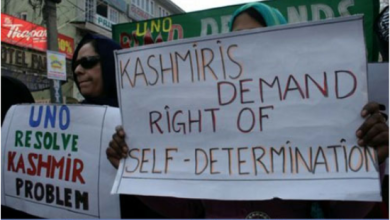
For decades, Malik remained steadfast in his advocacy for non-violent resistance. He engaged with civil society, political stakeholders, and international organizations, always articulating the Kashmiri cause with dignity and clarity. He never compromised on the core demand of self-determination, yet he also never resorted again to violence. In this sense, Malik’s politics were a test case for India: could it allow a Kashmiri leader to pursue peaceful struggle without fear of persecution? The answer, unfortunately, has been a resounding no.
India’s current stance, which seeks to crush Malik through imprisonment and possibly even execution, reveals both fear and failure. Fear—because Malik’s moral authority as a freedom fighter resonates deeply among Kashmiris, making him more powerful behind bars than many politicians outside. Failure—because by denying him space, India has squandered an opportunity to resolve the conflict through political dialogue.
The international community must recognize the gravity of this moment. To remain silent in the face of Malik’s persecution is to endorse the message that peaceful struggles can be criminalized without consequence. If Malik, who abandoned militancy and embraced dialogue, is condemned to die, what incentive remains for future generations of Kashmiris to pursue non-violence? India’s policies are not just unjust; they are dangerously short-sighted.
The choice before India is stark. It can continue down the path of repression, silencing leaders like Malik and thereby fueling alienation and radicalization. Or it can finally acknowledge that the road to peace lies through dialogue with genuine representatives of the Kashmiri people. The cost of ignoring this choice is already evident in the region’s instability and the growing despair of its youth.
History will remember Yasin Malik as a freedom fighter who had the wisdom to try peace when others still believed only in war. And it will record India’s betrayal—not his courage—as the defining failure of this chapter.
The question now is whether New Delhi will seize the chance to redeem itself by engaging voices like Malik’s, or whether it will persist in silencing them, thereby condemning Kashmir to yet another cycle of unrest. The world is watching, and the time for India to act with statesmanship is fast running out
The writer is chairman Kashmir Institute of International Relations and can be reached at [email protected] and X:- @sultan1913