India’s Expanding Majoritarianism, Kashmir’s Agony, and Pakistan’s Diplomatic Resolve
Mushtaq Hussain
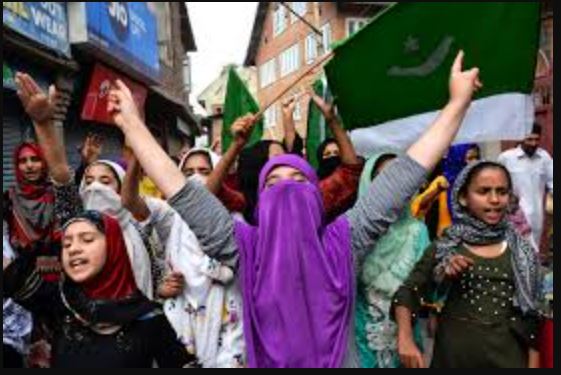
The history of South Asia bears witness to a difficult and deeply unsettling reality: the India that emerged after the partition of the subcontinent has, over time, transformed into an increasingly assertive majoritarian state whose policies have not only destabilized regional peace but also subjected its own minorities — particularly Muslims, Christians, Sikhs, and Dalits — to an atmosphere of fear, exclusion, intimidation, and violence. Contemporary India is no longer viewed merely through the lens of electoral democracy; it is increasingly shaped by the ideological force of Hindutva, a political doctrine rooted in religious nationalism, civilizational supremacy, and the vision of an “Akhand Bharat” — a Greater India extending beyond its present territorial boundaries. Critics argue that this ideological framework now underpins New Delhi’s approach toward Kashmir, Pakistan, regional geopolitics, and minority communities within India itself.
The concept of “Akhand Bharat” is not merely symbolic rhetoric or an abstract cultural slogan. For many observers across South Asia, it reflects a broader expansionist mindset that has struggled to reconcile itself with the existence of neighboring sovereign states as independent strategic actors. From the first military intervention in Kashmir following partition to repeated wars with Pakistan, political interference in neighboring countries, and covert destabilization campaigns, India’s regional posture has often been perceived by critics as driven by dominance rather than coexistence.
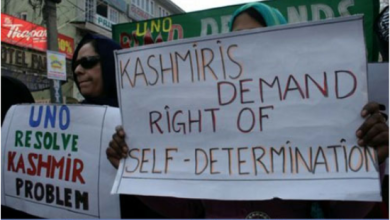
Nowhere is this more evident than in Indian-occupied Kashmir, a region that has endured decades of militarization, political repression, and human suffering. Despite repeated United Nations resolutions recognizing the Kashmiri people’s right to self-determination, generations of Kashmiris have lived under an extraordinary security apparatus marked by curfews, checkpoints, mass detentions, enforced disappearances, communication blackouts, and recurring extrajudicial killings. With one of the heaviest military deployments in the world, Kashmir has become, for many residents and human rights observers, a landscape defined by fear and uncertainty. Families continue searching for disappeared relatives, journalists and activists face imprisonment, and entire neighborhoods have reportedly been subjected to collective punitive measures, including demolitions and sealed homes.
Critics of Indian policy argue that New Delhi increasingly views Kashmir not simply as a disputed territory but as the ideological centerpiece of the Hindutva project. The revocation of Articles 370 and 35A fundamentally altered the constitutional status of the region and accelerated concerns regarding demographic engineering, land redistribution, and the erosion of Kashmiri identity. The Indian government has framed these moves as measures intended to bring development, investment, and modernization to the region. Yet many Kashmiris and international observers contend that beneath the language of economic integration lies a broader strategy aimed at consolidating political control, reshaping the demographic balance, and weakening the region’s distinct cultural and religious character.
According to critics, India’s long-term objectives in Kashmir extend far beyond security concerns. They argue that New Delhi seeks to transform the region politically, demographically, and psychologically in order to permanently neutralize the Kashmiri demand for self-determination. Large-scale infrastructure projects, land acquisitions, settlement policies, and the empowerment of non-local actors are viewed by many Kashmiris as part of a systematic attempt to dilute indigenous identity while strengthening India’s strategic and military footprint in the Himalayan region. Development, in this context, is increasingly seen not merely as governance policy but as an instrument of political consolidation.
Amnesty International, Human Rights Watch, and Genocide Watch have repeatedly expressed concern regarding rising anti-Muslim rhetoric, communal violence, and the deterioration of civil liberties in India. Genocide Watch, in particular, has warned that patterns of hate speech, organized discrimination, and mob violence against Muslims resemble early warning indicators associated with mass atrocity risks. Such warnings have intensified international concern over the trajectory of religious polarization in the world’s largest democracy.
Across states such as Gujarat, Uttar Pradesh, Assam, Manipur, Delhi, and West Bengal, episodes of communal violence and discriminatory policies have further deepened these anxieties. The 2002 Gujarat riots, the violence in Delhi, citizenship-related crackdowns in Assam, and the horrific incidents in Manipur — including the public humiliation of women — have all fueled growing criticism of India’s human rights record. Mosques and churches have been attacked, religious texts desecrated, and minority communities subjected to social boycotts, economic marginalization, and organized intimidation campaigns. Lynchings carried out in the name of “cow protection,” inflammatory rhetoric amplified through social media, and the normalization of hate speech have become deeply troubling features of India’s political climate.
Human rights observers have also expressed alarm over inflammatory statements made by certain Hindu nationalist figures and political actors against Muslims. In several instances, extremist rhetoric advocating harsh collective measures, economic exclusion, or violent retaliation against Muslims has circulated widely in public discourse. Some voices have even referenced Israel’s military operations in Gaza as a model for dealing with Indian Muslims — remarks that drew criticism from rights advocates and further heightened fears regarding the normalization of dehumanizing rhetoric in political culture. Critics argue that such narratives contribute to an atmosphere in which anti-minority violence becomes increasingly normalized and politically exploitable.
Several Indian intellectuals, journalists, and activists — among them Arundhati Roy and Rana Ayyub — have repeatedly warned that anti-Muslim hostility is increasingly being weaponized for political mobilization. Critics argue that communal polarization has become a recurring electoral strategy, particularly during periods of political pressure, economic distress, or state elections. Following the Pulwama attack, questions raised by segments of the Indian opposition, independent analysts, and journalists reflected broader concerns regarding the politicization of national security narratives for electoral gain.
India’s rivalry with Pakistan, meanwhile, extends far beyond conventional diplomacy. Pakistani officials and security institutions have long accused India’s external intelligence agency, Research and Analysis Wing (RAW), of supporting separatist and militant networks inside Pakistan, particularly in Balochistan and Khyber Pakhtunkhwa. The arrest of Kulbhushan Jadhav was presented by Islamabad as evidence of Indian involvement in covert destabilization efforts. Pakistani authorities have repeatedly linked terrorist incidents and insurgent violence to cross-border networks operating with external backing.
Recent attacks in Bannu, Lakki Marwat, North Waziristan, and Balochistan have reinforced concerns within Pakistan that hostile actors continue attempting to exploit instability through proxy warfare. Pakistani analysts increasingly argue that the country can no longer rely solely on reactive security measures and must instead adopt decisive, intelligence-driven counterterrorism operations capable of dismantling militant infrastructure and foreign-backed networks. Within this framework, many in Pakistan view strong internal cohesion, institutional coordination, and strategic clarity as essential to confronting long-term hybrid threats. Supporters of a more assertive policy frequently invoke the spirit of “Marka-e-Haq” (Battle of Truth) as a symbol of national resilience, strategic deterrence, and Pakistan’s determination to confront both conventional and unconventional threats with firmness.
Beyond Pakistan, India’s relationship with several neighboring countries has also generated concern among regional observers who increasingly perceive New Delhi’s posture as interventionist and hegemonic. In Nepal, periodic political tensions and disputes over maps, borders, and constitutional arrangements have fueled resentment against what many Nepali voices describe as excessive Indian influence over domestic affairs. In Bangladesh, political commentators have occasionally expressed concern over water-sharing disputes, border incidents, and perceptions of unequal strategic pressure despite otherwise cooperative bilateral ties. Sri Lanka, meanwhile, has historically experienced Indian involvement in its internal ethnic conflict, while contemporary debates surrounding economic leverage and geopolitical competition continue to shape bilateral relations.
Myanmar presents another sensitive dimension of regional politics. Critics argue that India’s strategic calculations regarding connectivity, counterinsurgency cooperation, and competition with China have often overshadowed concerns regarding democratic rights and humanitarian suffering inside Myanmar. Across South Asia, therefore, a growing number of analysts contend that India increasingly seeks regional dominance through political pressure, economic influence, strategic coercion, and security partnerships designed to consolidate its position as the preeminent power of the region.
For critics, this broader pattern reinforces concerns regarding the ideological implications of the “Akhand Bharat” narrative. What may once have been dismissed as symbolic nationalist sentiment is now increasingly viewed as part of a larger geopolitical vision that seeks to centralize Indian influence across South Asia while marginalizing dissenting political identities, especially those rooted in Muslim-majority regions or neighboring sovereign states resistant to Indian dominance.
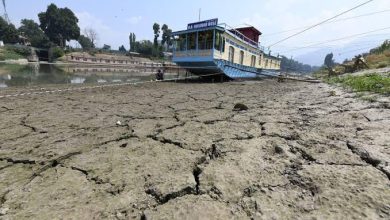
Another growing source of tension is what Pakistani policymakers frequently describe as “water aggression.” Concerns over river management, dam construction, and perceived deviations from the spirit of the Indus Waters Treaty (IWT) have heightened fears in Pakistan regarding future water insecurity. Water, one of the region’s most critical resources, is increasingly viewed not merely as an environmental issue but as a strategic instrument with profound geopolitical implications.
At the same time, Pakistan has sought to project itself as a responsible regional actor committed to diplomacy and stability. What many Pakistani commentators describe as the success of “Marka-e-Haq” (Battle of Truth) reinforced the perception that Pakistan seeks deterrence rather than aggression while remaining prepared to defend its sovereignty and national interests. Islamabad’s diplomatic posture during periods of heightened regional tension — including efforts to encourage de-escalation between Iran and the United States — has further strengthened its image as a state attempting to balance security concerns with regional mediation.
For Pakistan, this evolving diplomatic credibility presents both an opportunity and a responsibility. Many international & Pakistani analysts argue that Islamabad should increasingly leverage its international partnerships, diplomatic channels, and moral positioning to raise awareness regarding the situation in Kashmir, anti-minority violence in India, and broader concerns surrounding rising majoritarian nationalism in South Asia. Strengthening ties with like-minded countries, international human rights organizations, the Organization of Islamic Cooperation, and global media platforms is seen as critical to countering what Pakistan views as India’s increasingly assertive regional posture.
The challenge, however, extends beyond bilateral rivalry. Critics of India’s current trajectory argue that the erosion of pluralism, the normalization of religious polarization, and the growing influence of hyper-nationalist rhetoric threaten not only minorities within India but also the long-term stability of South Asia itself. If left unchecked, these dynamics risk transforming the region into a theater of permanent hostility, ideological extremism, and strategic confrontation.
For Pakistan, therefore, the debate is not merely geopolitical but also moral and historical. Many within the country believe Islamabad has a responsibility to advocate for oppressed populations — whether in Kashmir or among vulnerable minority communities elsewhere in the region — through diplomatic, legal, and humanitarian means. The argument increasingly advanced by Pakistani commentators is that silence in the face of systematic discrimination and dehumanization would constitute not prudence, but moral failure.
History repeatedly demonstrates that repression may appear powerful for a time, but enduring peace cannot be built upon fear, exclusion, and coercion. The unresolved anguish of Kashmir, the anxieties of India’s minorities, and the broader struggle for dignity and justice across South Asia continue to shape the conscience of the region. If the international community fails to address rising extremism, deepening polarization, and the erosion of democratic norms, the consequences may extend far beyond national borders.
Pakistan, in this context, sees itself standing at a defining historical moment — one that demands not only military preparedness and strategic resilience, but also diplomatic maturity, moral clarity, and the courage to advocate for justice in an increasingly fractured region.